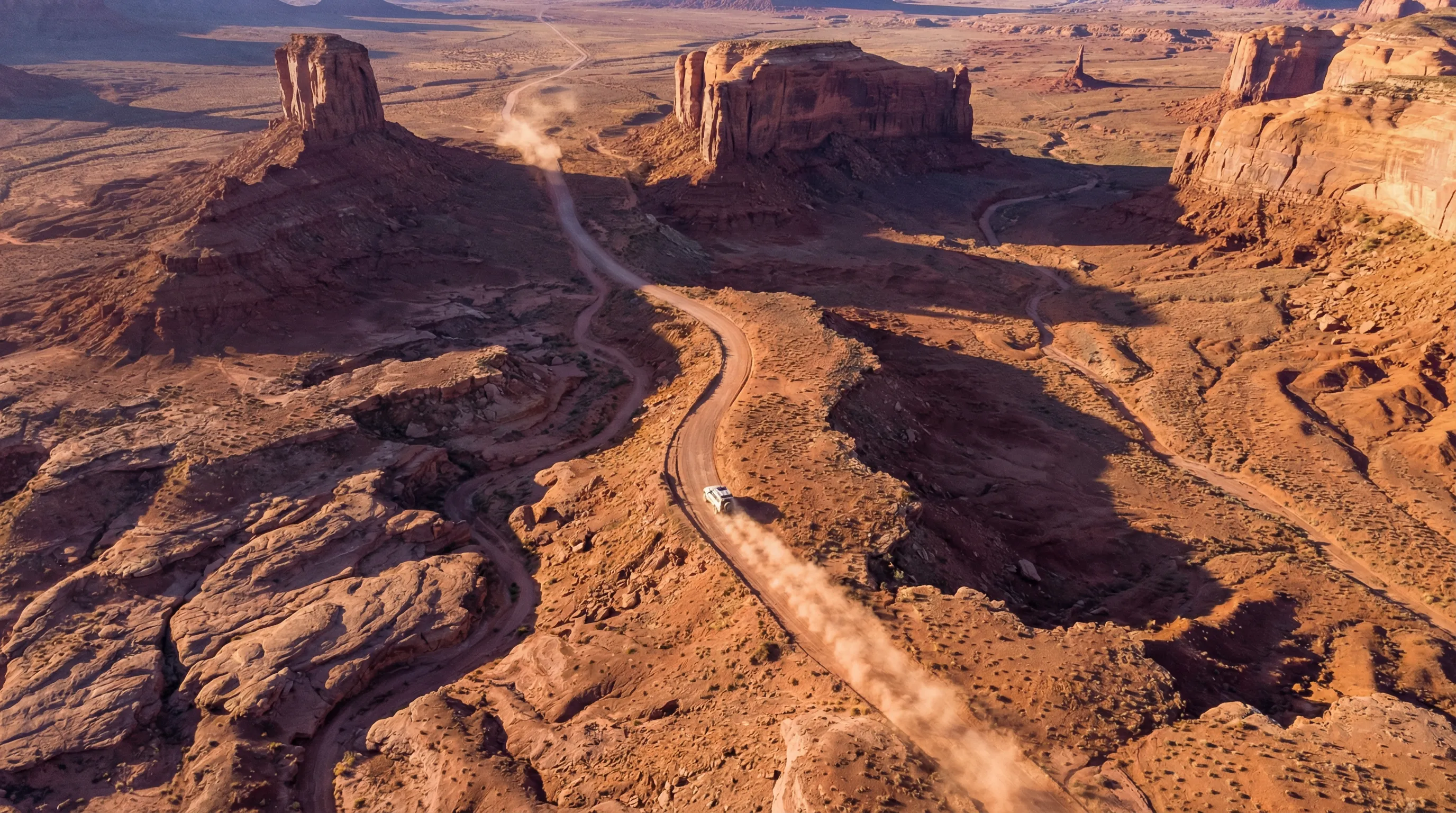
Choosing the Right Rental Vehicle for Off-Road
The question lands in our inbox at least twice a week: “Do I need a 4x4?” The answer is almost never a simple yes or no. It depends on the route, the season, the terrain, your experience, and how much sleep you want to lose worrying about that grinding noise from under the chassis. We have rented vehicles in all 13 countries we cover, from economy sedans in Albania to Land Cruisers in Namibia, and the single most important decision on any off-road trip is getting the vehicle category right.
Get it wrong and you are either overpaying by $40 a day for capabilities you never use, or you are standing beside a beached Hyundai Tucson on a rocky track in Oman, watching the sunset and wondering who to call.
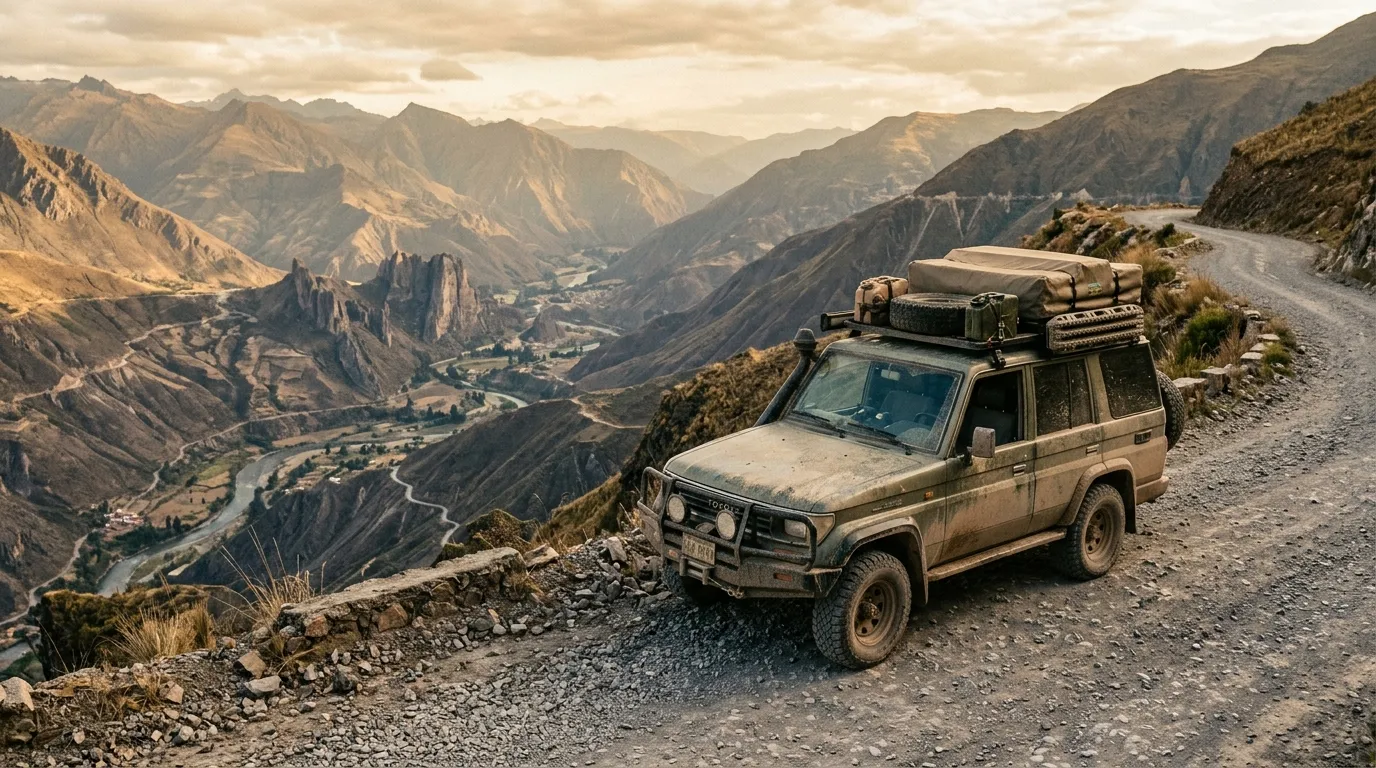
The four vehicle categories
We classify rental vehicles into four categories based on their off-road capability. This is our system, not the rental industry’s — they tend to use categories like “Economy” and “Premium SUV” which tell you about the price, not the terrain.
Category 1: 2WD Sedan or Hatchback
Ground clearance: 120-160 mm
Examples: Toyota Corolla, Hyundai i20, Renault Clio, Suzuki Swift
The default rental car. Fine for paved roads and well-maintained gravel in dry conditions. That is about it. We once drove a Renault Clio 50 km down a graded gravel road to the Baviaanskloof trailhead in South Africa. The car survived, but we could hear every stone and the undercarriage had the scuffs to prove it. We would not do it again.
When it works: Urban driving. Paved intercity routes. Very well-maintained gravel roads in dry conditions (parts of Namibia’s B-roads, Albania’s main highways). Getting to the trailhead, not the trail itself.
When it does not: Anything with ruts deeper than 10 cm, rocky sections, water crossings, sand, mud, or steep gradients on loose surfaces.
Category 2: 2WD High-Clearance (Crossover or SUV)
Ground clearance: 170-210 mm
Examples: Dacia Duster 2WD, Hyundai Tucson, Suzuki Vitara 2WD, Toyota RAV4
The most underrated category. A 2WD crossover with 200 mm of ground clearance can handle a surprising amount of unpaved road. The Dacia Duster in particular has become the workhorse rental car of the Balkans and North Africa — we have driven Dusters on moderately rough gravel in Albania, Montenegro, Morocco, and Romania, and they cope remarkably well.
When it works: Graded and ungraded gravel. Moderate corrugations. Gentle inclines on loose surfaces. Shallow water crossings (under 20 cm). Most “Easy” rated routes on our site. Many “Moderate” routes in dry conditions.
When it does not: Sand driving. Deep ruts. River crossings over 25 cm. Steep muddy inclines. Anything requiring low-range gearing. Loose rock requiring precise wheel placement.
Category 3: 4x4 Without Low-Range
Ground clearance: 200-230 mm
Examples: Suzuki Vitara 4WD, Toyota RAV4 AWD, Subaru Forester, Hyundai Tucson 4WD
A step up from Category 2 in traction but not necessarily in capability. Most modern AWD/4WD crossovers have electronically managed four-wheel drive that helps on slippery surfaces but does not replace low-range gearing for steep or technical terrain. The difference between this category and Category 4 is the ability to crawl at very low speeds with high torque — which is exactly what you need on steep rocky descents and deep sand.
When it works: Everything Category 2 can do, plus: muddy tracks where 2WD would spin. Moderate inclines on gravel. Light rocky sections. The “Moderate” routes on our site.
When it does not: Deep sand (no low-range to keep momentum at low speed). Steep descents on loose rock (no engine braking at crawl speed). Genuine river fords. Most “Challenging” and all “Expert” rated routes.
Category 4: 4x4 With Low-Range
Ground clearance: 210-260 mm
Examples: Suzuki Jimny, Toyota Land Cruiser Prado, Toyota Hilux, Land Rover Defender, Mitsubishi Pajero, Toyota Fortuner
This is the category that covers everything on our site. Low-range transfer case, proper 4WD engagement (not just electronic traction control), and usually a locking rear differential or at minimum a limited-slip diff. The Suzuki Jimny is the budget end — tiny, cramped, and surprisingly capable. The Land Cruiser Prado is the gold standard for rental off-road vehicles in Africa and the Middle East.
When you need it: Sand driving (Wadi Rum, Wahiba Sands, Sahara pistes). River crossings deeper than 30 cm. Steep rocky ascents and descents (Sani Pass, Tusheti Road). Any route rated “Challenging” or “Expert” on our site. Routes where recovery is your own problem because no one else is coming.
When it is overkill: Graded gravel highways in Namibia. Paved mountain passes in Romania. City driving anywhere. If the route is rated “Easy” and conditions are dry, you are paying for capability you will not use.
What to rent where
Not every country offers every vehicle category for rental. Availability varies significantly and affects your planning.
| Country | Best Available Category 4 | Typical Daily Cost (USD) | Notes |
|---|---|---|---|
| Jordan | Land Cruiser Prado, Pajero | $80-130 | Book well ahead for Wadi Rum season (Oct-Mar) |
| Georgia | Mitsubishi Pajero, Suzuki Jimny | $50-90 | Jimny is everywhere; Prado/Hilux rarer and pricier |
| Iceland | Suzuki Jimny, Dacia Duster 4x4, Land Cruiser | $100-200 | Most expensive country for 4x4 rental. Jimny popular but too small for F-roads with gear |
| Albania | Suzuki Jimny, Dacia Duster 4x4 | $40-70 | Limited Cat 4 options. Most rentals are Cat 1-2 |
| Montenegro | Suzuki Jimny, Dacia Duster 4x4 | $45-80 | Similar to Albania. Book Cat 4 in advance |
| South Africa | Toyota Hilux, Fortuner, Land Cruiser | $60-120 | Best Cat 4 availability of any country we cover |
| Namibia | Toyota Hilux, Land Cruiser, Land Rover | $80-150 | Specialist overlanding rental companies with roof tents and recovery gear included |
| Tanzania | Toyota Land Cruiser, Hilux | $100-180 | Self-drive options limited. Most agencies push guided |
| Ethiopia | Toyota Land Cruiser | $120-200 | Almost no self-drive rental. Guide/driver usually required |
| Morocco | Dacia Duster 4x4, Toyota Land Cruiser | $50-100 | Duster handles most Atlas routes. LC needed for Sahara |
| Oman | Toyota Land Cruiser, Pajero, Nissan Patrol | $70-130 | Good availability. Deflation kits sometimes included |
| Romania | Dacia Duster 4x4, Suzuki Jimny | $35-60 | Most routes work with Cat 2. Cat 4 for forest tracks |
| Bosnia | Dacia Duster 4x4, Suzuki Jimny | $40-65 | Limited. Cat 2 sufficient for most routes |
Prices are approximate for peak season and fluctuate with demand, rental duration, and how far in advance you book.
The rental counter inspection
Picking the right category is half the job. The other half is making sure the specific vehicle they hand you is fit for purpose. Rental companies do not maintain their off-road fleet the same way they maintain their airport sedans, and we have been given vehicles with bald tires, missing jack handles, and spare tires that were flat.
Here is what to check before you drive away.
Tires
This is the single most important inspection item.
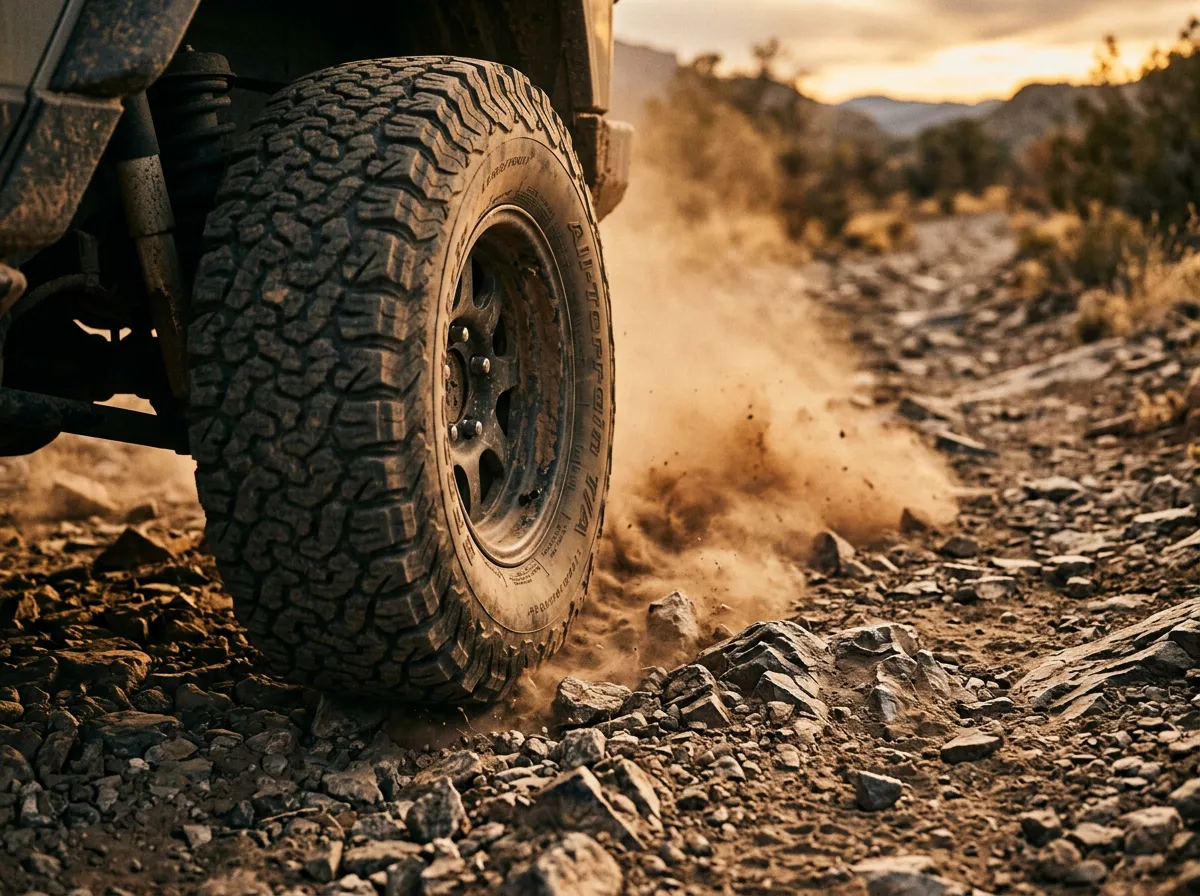
- Tread depth. Press a coin into the tread. If you can see the entire rim of the coin, the tires are too worn for off-road use. You want at least 4 mm of tread. More is better.
- Tire type. Highway-terrain (HT) tires are fine for gravel. All-terrain (AT) tires are better. Mud-terrain (MT) tires are rarely found on rental vehicles but are ideal for serious off-road. Check what is fitted — if you are heading to Wadi Rum on highway tires, you have a problem.
- Condition. Look for sidewall damage, bulges, cracks, and uneven wear. Sidewall damage is a blowout waiting to happen on rocky terrain.
- Pressure. Confirm the current pressure and ask what the recommended off-road pressure is. Rental staff rarely know the answer, but asking establishes that you know what you are doing.
Spare tire
- Does it exist. Do not assume. We have been given vehicles with no spare.
- Is it inflated. Check the pressure. A flat spare is a 35 kg paperweight.
- Is it the same size as the road tires. A space-saver spare (the small temporary tire) is useless off-road. If that is all they have, negotiate for a full-size spare or a different vehicle.
- Can you access it. Spare tires mounted under the vehicle sometimes have rusted-out mounts. Make sure you can actually get it off.
Recovery and tools
- Jack. Is there one? Does it work? Can it lift the vehicle high enough to change a tire on uneven ground? Scissor jacks (the type found in most rental cars) are nearly useless off-road. If you are doing anything beyond graded gravel, bring your own hi-lift jack or at minimum a bottle jack.
- Wheel wrench. Is there one? Does it fit the lug nuts? Test it.
- Tow points. Front and rear. Are they present? Some rental vehicles have blanking plates where recovery points should be. This matters if you get stuck and someone tries to pull you out — without a proper tow point, they will pull off your bumper instead.
Mechanical condition
- Brakes. Do a hard stop in the car park. Any pulling, grinding, or sponginess is a reason to reject the vehicle.
- 4WD engagement. If the vehicle has selectable 4WD (most do), engage it in the car park. Then engage low-range. Listen for grinding or hesitation. Rental 4x4s that have spent most of their life on pavement sometimes have 4WD systems that have seized from disuse.
- Lights. All of them. Headlights, brake lights, reverse lights, fog lights. You will need them.
- Underbody. Get down and look underneath. Oil leaks, hanging cables, damaged skid plates, missing bolts. Photograph everything.
Documentation
- Photograph the vehicle. Every angle. Every existing scratch, dent, chip, scrape. The roof. The wheel arches. The bumpers. Close-ups of any damage. Video a full walk-around. Do this before you move the car, with the rental agent present if possible.
- Check the contract. Does it permit driving on unpaved roads? Many standard rental contracts explicitly exclude “off-road driving.” If yours does, you need to either negotiate an amendment or find a specialist rental company.
- Emergency numbers. Make sure you have the rental company’s 24-hour number. Save it in your phone and write it on a piece of paper in the glovebox.
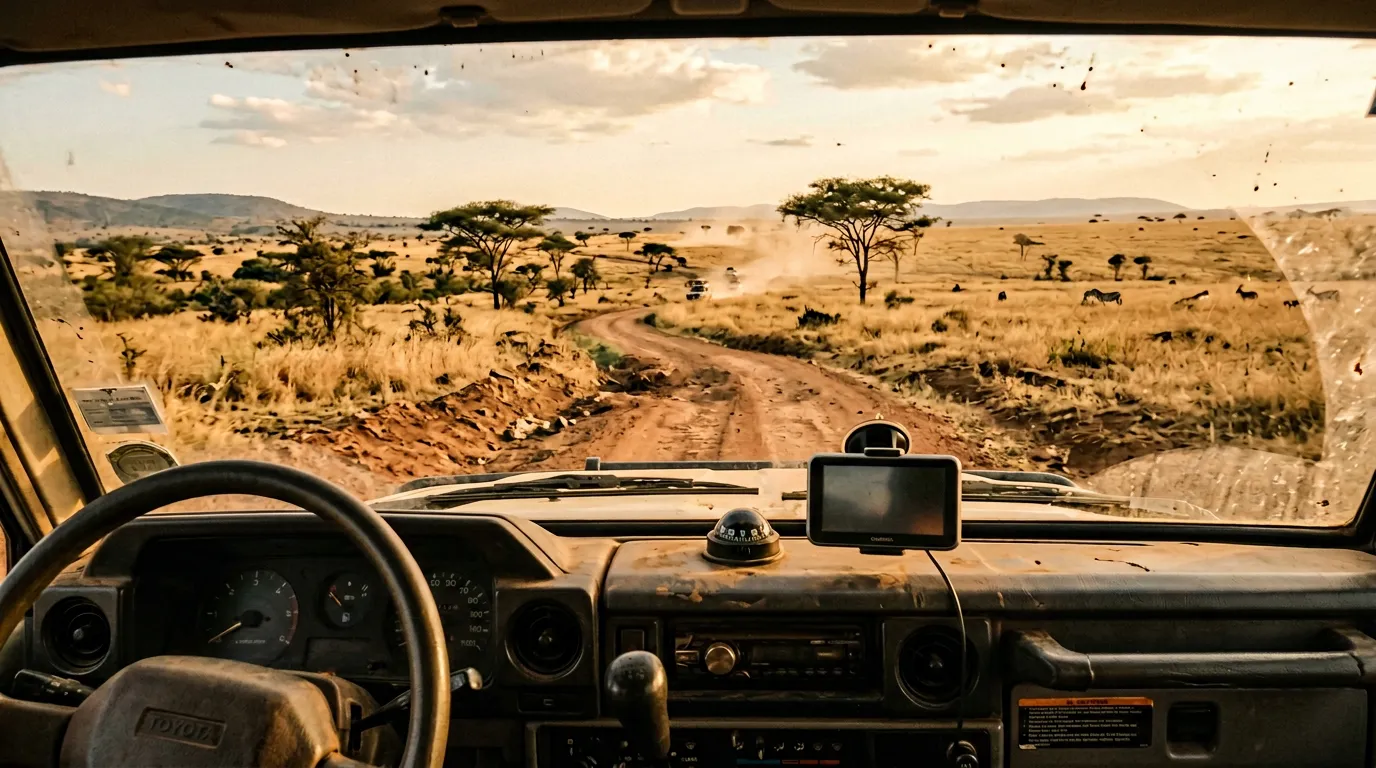
The off-road clause in rental contracts
This deserves its own section because it catches people constantly.
Standard rental contracts from international chains (Hertz, Europcar, Sixt, Avis) almost universally contain a clause that excludes coverage for damage sustained on “unpaved roads,” “off-road,” or “unmaintained surfaces.” The exact wording varies but the intent is the same: if you damage the car on dirt, you pay.
This creates a problem for anyone who wants to drive the routes we document, because most of those routes are on unpaved roads by definition.
Your options:
-
Use a specialist rental company. In countries like Namibia, South Africa, Iceland, and Oman, there are rental companies that specifically cater to off-road travellers. Their contracts permit unpaved roads. Their vehicles are maintained for it. Their insurance covers it. They cost more, but the coverage is real. See our country-specific guides for recommendations.
-
Negotiate with the rental company. In some countries (Georgia, Albania, Morocco), local rental companies are more flexible than international chains. They know their vehicles are driven on dirt roads. Ask explicitly whether the contract permits unpaved road driving, and get the answer in writing — an email or a clause added to the contract.
-
Get third-party off-road insurance. Companies like RentalCover and Insurance4CarHire offer policies that cover damage on unpaved roads, including tire, windshield, and underbody damage. You pay the rental company’s excess out of pocket, then claim it back. This works, but read the policy carefully — some exclude “extreme off-road” which they define however they like. More on this in our insurance guide.
-
Accept the risk. Some people drive on dirt roads with standard rental insurance and accept that any damage comes out of pocket. We do not recommend this approach, but we are realistic about the fact that it happens. If you go this route, drive conservatively and carry enough on your credit card to cover the excess.
Matching vehicle to route
Here is our decision framework, distilled from years of making this choice.
| Route Difficulty | Terrain | Minimum Vehicle | Recommended Vehicle |
|---|---|---|---|
| Easy | Graded gravel, maintained | Cat 2 (high-clearance 2WD) | Cat 2 |
| Easy | Graded gravel, corrugated | Cat 2 | Cat 3 (4x4, comfort) |
| Moderate | Ungraded, rocky, ruts | Cat 3 (4x4) | Cat 4 (4x4 low-range) |
| Moderate | Sand sections, shallow fords | Cat 4 | Cat 4 |
| Challenging | Deep sand, steep grades, fords | Cat 4 | Cat 4 with recovery gear |
| Expert | No defined track, deep fords | Cat 4 with modifications | Cat 4 with modifications + support vehicle |
A few routes that illustrate the boundaries:
-
David Gareja, Georgia (Easy): A well-worn gravel track through semi-desert. A Dacia Duster 2WD handles it comfortably. A sedan can do it slowly in dry conditions, though you will feel every bump.
-
Durmitor Ring Road, Montenegro (Moderate): Ungraded gravel with some rocky sections and ruts. A 4x4 without low-range works in dry weather. After rain, you want low-range for the steeper sections.
-
Tusheti Road, Georgia (Challenging): You need a 4x4 with low-range. Period. The road includes steep gradients on loose rock, tight switchbacks with drops, and sections where wheel placement matters more than ground clearance.
-
Wahiba Sands, Oman (Expert): Deep sand dune driving. 4x4 with low-range, tire deflation to 15-18 PSI, recovery boards, and experience. This is not a route to learn dune driving on.
The Jimny question
The Suzuki Jimny deserves special mention because it appears on every 4x4 rental list in Europe and the Middle East, and it generates strong opinions.
Strengths. Genuine low-range transfer case. Excellent approach and departure angles. Compact enough for narrow tracks. Surprisingly good in deep ruts and technical terrain. Light enough to recover if stuck. Available everywhere and usually the cheapest Cat 4 option.
Weaknesses. Tiny. Two usable seats (the rear seats are for small children or luggage, not adult passengers). Almost no cargo space. Underpowered on highways. Tiring to drive long distances. Wind noise at speed. Limited fuel tank (40 litres on the new model) means limited range — critical for remote routes.
Our verdict. The Jimny is excellent for day trips and short technical routes where its compactness is an advantage. For multi-day expeditions where you need to carry camping gear, extra fuel, and recovery equipment, it is too small. We drove a Jimny on the Tusheti Road in Georgia and it was brilliant on the road itself — but we had to leave half our gear at the guesthouse because there was nowhere to put it.
For multi-day off-road trips, a Hilux, Pajero, Prado, or Fortuner is a better choice. More space, more fuel range, more comfort on the transfer stages, and equal capability on the tracks themselves.
What to carry regardless of vehicle
Whether you are in a Duster or a Land Cruiser, pack these:
- Tire pressure gauge (digital, not the pencil type)
- Portable air compressor (the 12V type that plugs into the cigarette lighter)
- Tow strap (rated for at least twice the vehicle’s weight)
- Basic tool kit (pliers, screwdrivers, adjustable wrench, duct tape, cable ties)
- 5-10 litres of water beyond your drinking supply (for the radiator, for washing mud off the windshield, for drinking if stranded)
- First aid kit
- Torch/flashlight (headlamp is better — you need both hands for tire changes)
- Offline maps loaded and tested (see our driving essentials guide)
For routes rated “Challenging” or “Expert,” add: recovery boards, hi-lift or exhaust jack, shovel, extra fuel jerry can, and satellite communication device.
Final notes
The rental vehicle market changes frequently. Prices shift, models rotate out of fleets, specialist companies open and close. Our country hub pages include current rental recommendations that we update when we return to each country or receive reliable reports from readers.
One principle does not change: it is always better to have more vehicle than you need than less. The cost difference between a Dacia Duster and a proper 4x4 is typically $20-40 per day. That is the price of a restaurant meal. It buys you ground clearance, low-range gearing, and the ability to handle whatever the route throws at you without white-knuckling through sections you should not be driving in that vehicle.
Do not cheap out on the thing that has to carry you across 200 km of desert. Get the right tool for the job.
| Insurance fine print for dirt roads | Driving essentials and recovery gear | Fuel range planning |