Oman
Route Specimens
3 routes surveyed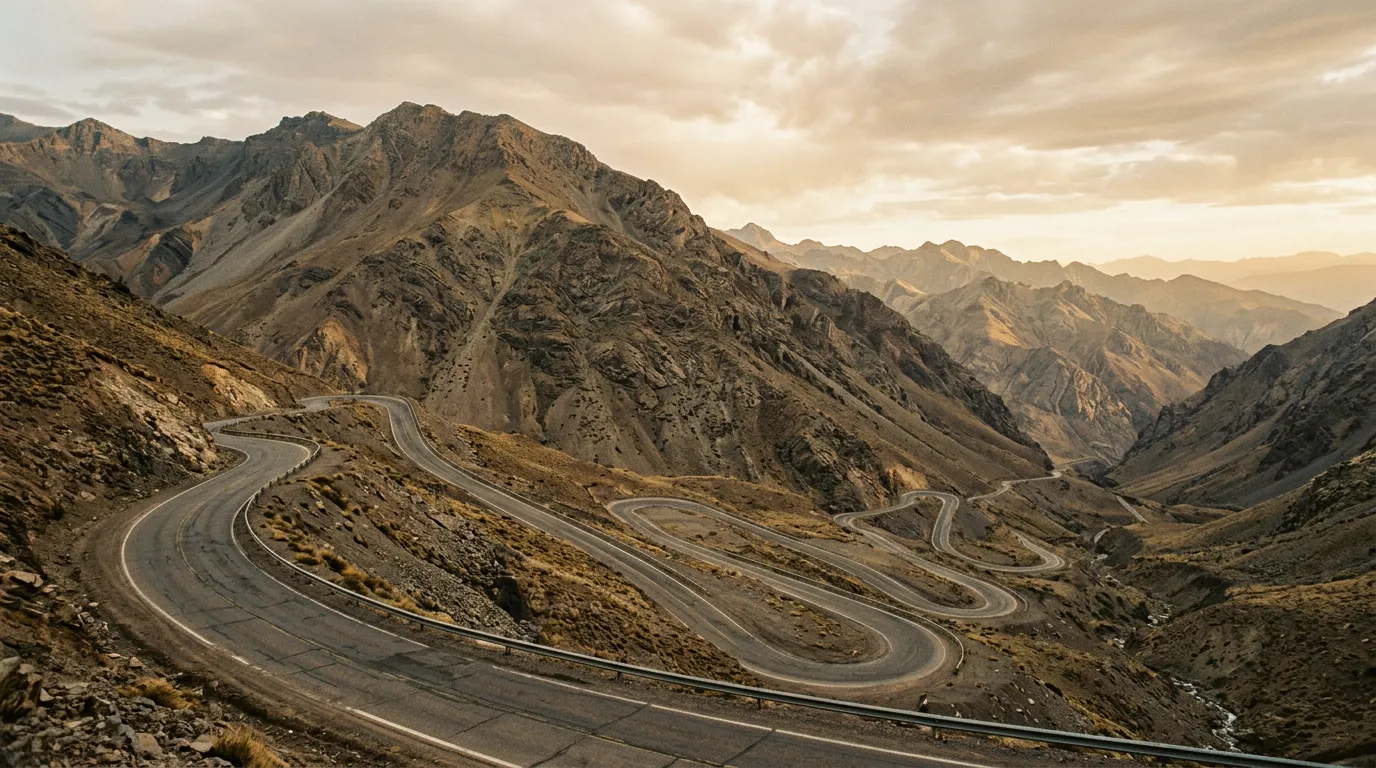
Oman Off-Road Routes
Oman is the country that makes other Middle Eastern driving destinations look casual. It has mountains that rise to 3,000 metres directly from sea level. It has wadis that flash-flood with enough force to rearrange the landscape. It has desert sand dunes that require genuine expertise to cross. And it has a government that, rather unusually, has decided that off-road driving access is a feature rather than a problem — the roads into the mountains are maintained, the desert approaches are signed, and the police checkpoints that control access to the most dangerous routes are staffed by officers who check your vehicle’s capability rather than your paperwork.
We have driven three routes in Oman that cover the range of terrain the country offers. The Jebel Akhdar mountain road climbs to 2,000 metres on a paved but demanding ascent where 4x4 is required by law. The Wahiba Sands crossing is an 80 km traverse of one of the Arabian Peninsula’s great sand deserts — expert-level dune driving in deep sand. And the Wadi Bani Khalid to Sur route connects turquoise swimming pools in a canyon to the Indian Ocean coast, offering the most accessible of the three and the only one where you might finish the day with a swim rather than a mechanical inspection.
Together, these routes span mountain, desert, and wadi terrain across the Al Hajar Mountains and the Sharqiya region of eastern Oman.
Terrain classification
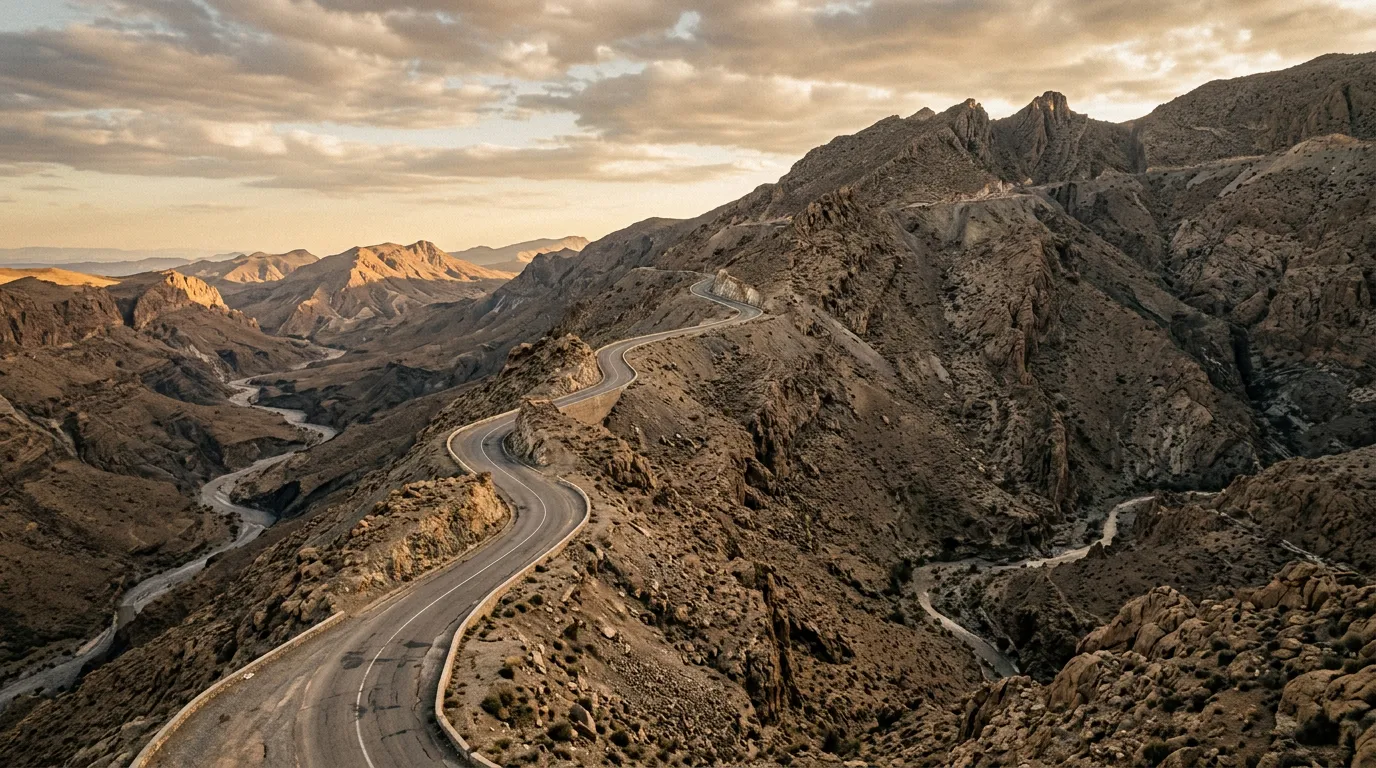
Oman’s geography is dominated by two features: the Al Hajar Mountains, which run parallel to the northern coast and reach 3,009 metres at Jebel Shams, and the Sharqiya (Wahiba) Sands, a sand desert occupying the eastern interior. Between and around these features, the terrain includes coastal plains, gravel wadis, rocky foothills, and the Empty Quarter (Rub’ al Khali) desert approaching from the southwest.
| Terrain type | Where you find it | Vehicle requirement |
|---|---|---|
| Mountain road (paved) | Jebel Akhdar, Jebel Shams | 4x4 required (enforced at checkpoints) |
| Wadi (dry river bed) | Throughout Al Hajar range | 4x4 for most, high-clearance 2WD for a few |
| Desert sand (dunes) | Wahiba Sands, Ramlat al Wahiba | 4x4 with low-range mandatory |
| Gravel plain | Interior plateau, desert edges | High-clearance 2WD |
| Coastal road | Batinah and Sharqiya coasts | Any vehicle |
The elevation range is extreme by regional standards: the routes we drove span from sea level at Sur to 2,000 metres on the Jebel Akhdar plateau, with the Wahiba Sands sitting at a modest 100-250 metres between them.
Our documented routes
Jebel Akhdar Mountain Road
| **Catalog: TB-OM-001 | Difficulty: Moderate | Distance: 45 km | Duration: Half day** |
The shortest route in our Oman collection and the only one that is entirely paved, but do not let those facts mislead you. The climb to Jebel Akhdar (“Green Mountain”) ascends 1,400 metres in 45 km via hairpin turns that are engineered for 4x4 vehicles and policed accordingly — a checkpoint at the base turns back any vehicle without four-wheel drive. At the summit, rose gardens and terraced villages sit in a climate 15 degrees cooler than the coast below. The road itself is the attraction: a sustained mountain ascent through barren rock that opens, suddenly, onto an alpine plateau that has no business being in Arabia. Read the full route guide.
Wahiba Sands Crossing
| **Catalog: TB-OM-002 | Difficulty: Expert | Distance: 80 km | Duration: 1-2 days** |
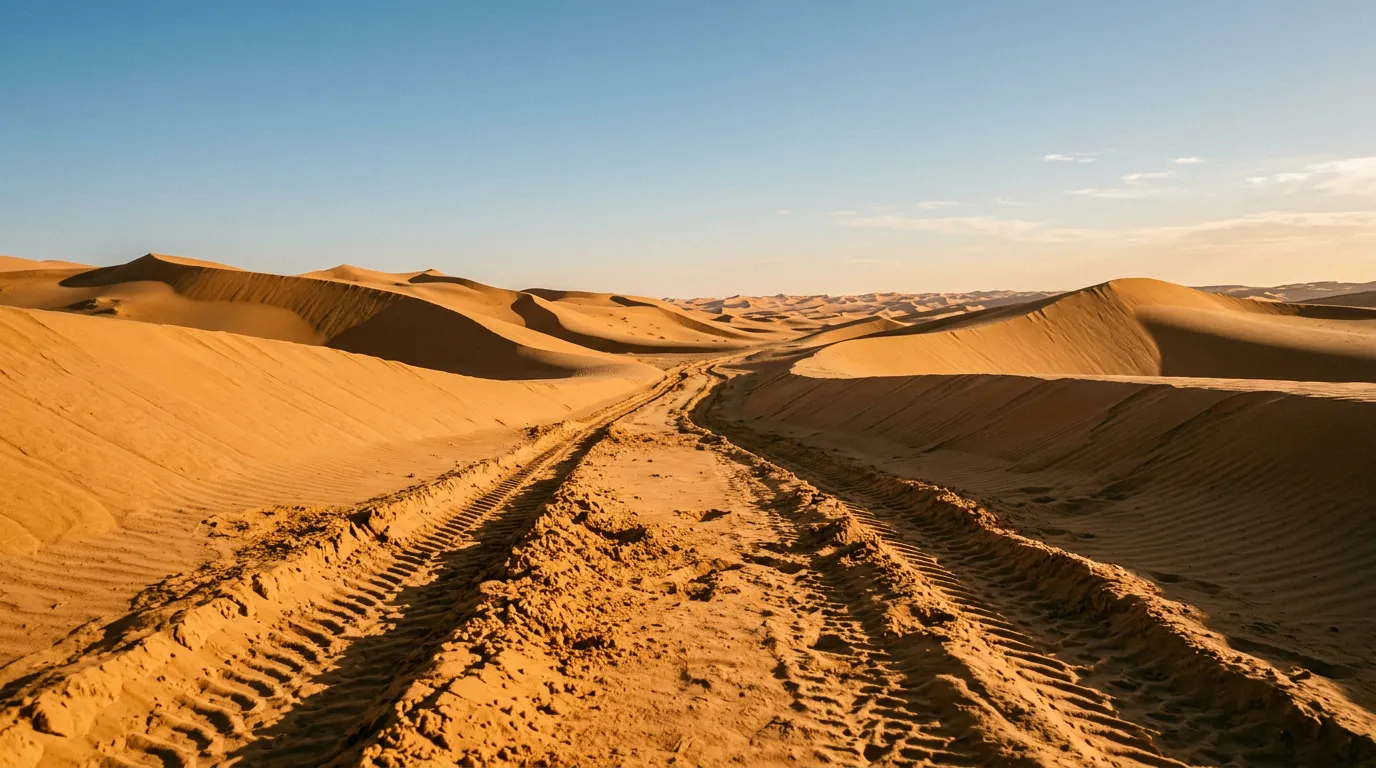
The real thing. An 80 km north-to-south crossing of the Sharqiya Sands (still known locally as the Wahiba), navigating dune ridges, hard-pan flats, and sabkha (salt flat) edges. This is expert sand driving — tires at 12-15 PSI, recovery boards on permanent standby, and navigation by dune topography because there are no tracks, no markers, and no roads. Bedouin camps on the hard-pan flats offer overnight stays under desert stars, which sounds romantic and is, provided you have already secured your vehicle and your nerves for the night. Read the full route guide.
Wadi Bani Khalid to Sur
| **Catalog: TB-OM-003 | Difficulty: Moderate | Distance: 120 km | Duration: 1 day** |
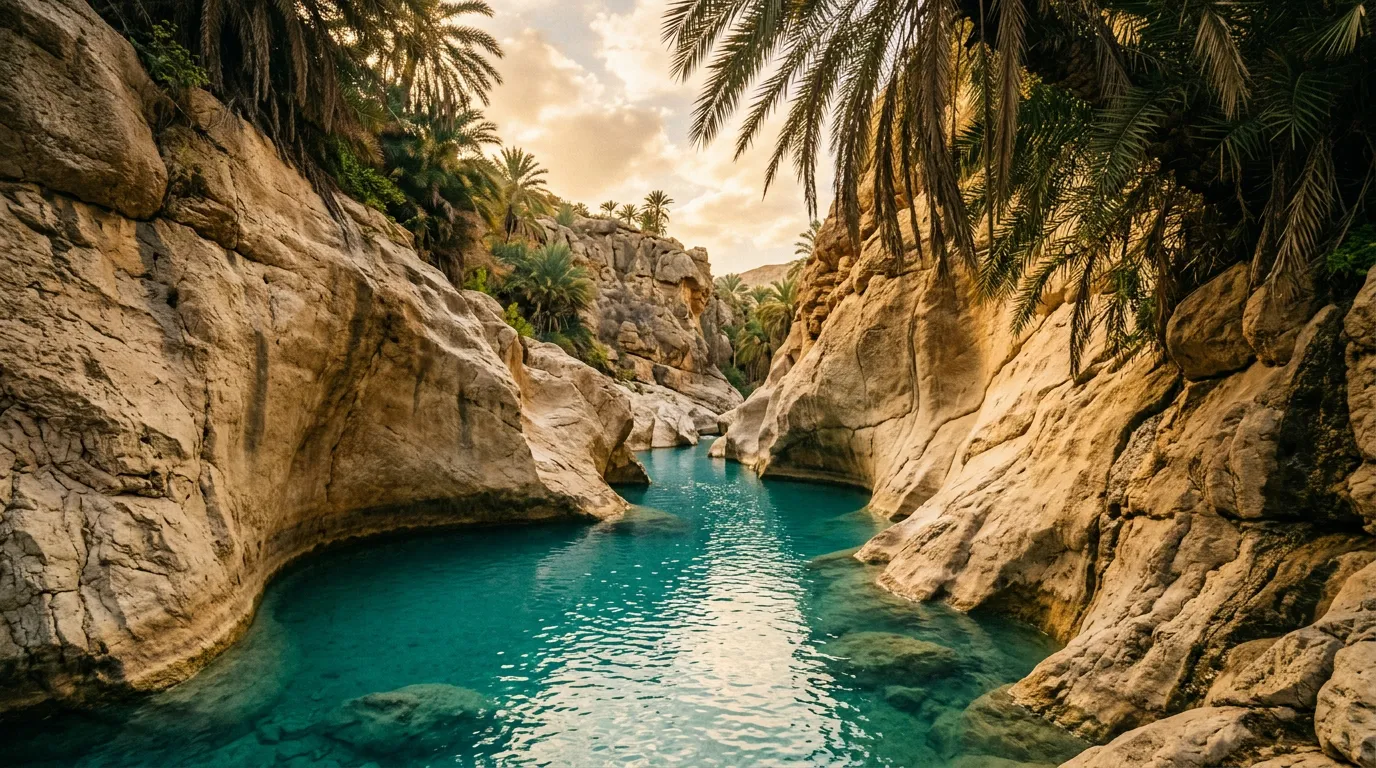
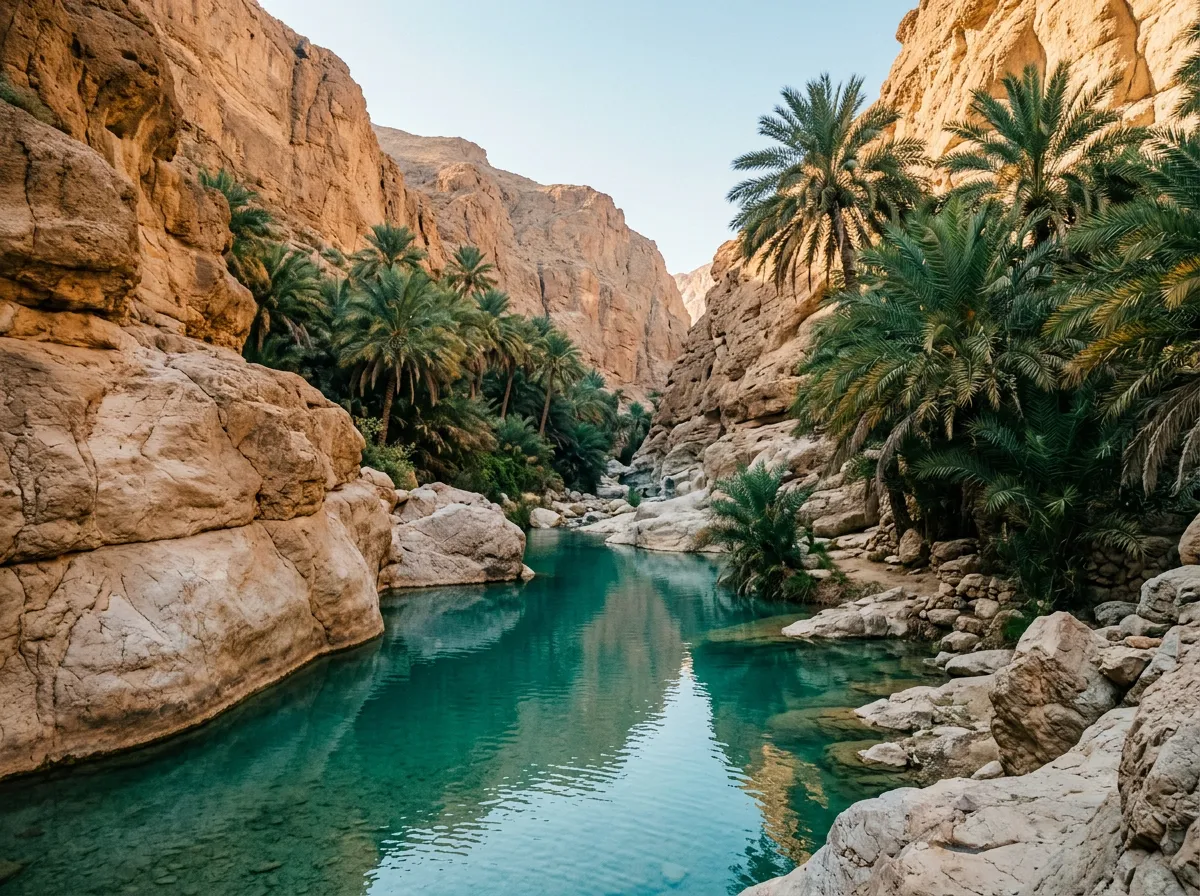
The most accessible of our Oman routes and the one most likely to include swimming as a primary activity. Wadi Bani Khalid is Oman’s most popular wadi — turquoise pools between limestone canyon walls, a paved road to the lower pools, and a 4x4 track to the upper caves that most visitors never reach. The route continues east through gravel tracks and coastal roads to the port town of Sur, where traditional dhows are still built by hand. A moderate day drive with excellent variety. Read the full route guide.
Practical information
Vehicle selection
Oman has a mature rental market with good availability of 4x4 vehicles. The standard choices:
For all three routes: Toyota Land Cruiser (Prado or full-size), Nissan Patrol, Mitsubishi Pajero. These are the workhorses of the Omani off-road scene, and rental agencies in Muscat offer them from approximately 25-40 OMR per day (65-105 USD). Book ahead in the October-November high season.
For Jebel Akhdar and Wadi Bani Khalid only: A Suzuki Jimny or similar compact 4x4 is sufficient. Cheaper (15-20 OMR per day) and easier to manoeuvre on narrow mountain roads.
Not recommended: 2WD vehicles of any kind. The Jebel Akhdar checkpoint will turn you back, the Wahiba Sands will bury you, and the Wadi Bani Khalid upper canyon will beach you on rocks.
Insurance: Standard rental insurance in Oman typically covers paved roads only. Off-road supplements are available from some agencies, particularly those catering to the tourism market. Read the policy carefully — “off-road” may be defined differently by the insurance company and by reality.
Fuel planning
Oman’s fuel is cheap (approximately 0.24 OMR per litre, about 0.62 USD) and available in every town. The challenge is the gaps between towns.
| Route | Last fuel | Next fuel | Gap |
|---|---|---|---|
| Jebel Akhdar | Birkat al Mawz | Same (return route) | ~50 km round trip |
| Wahiba Sands | Al Wasil | Al Kamil or Sur | ~100+ km |
| Wadi Bani Khalid to Sur | Ibra | Sur | ~60 km |
For the Wahiba crossing, carry a minimum 20L jerry can. For the other routes, a full tank is sufficient.
Season and weather
The driving season is October to April. Oman is hot — seriously, continuously, impressively hot. Summer temperatures on the coast regularly exceed 45 degrees, and in the interior desert they push past 50. The mountains offer relief (Jebel Akhdar is 15 degrees cooler than the coast), but the driving to reach them is still in the heat.
The optimal months are November and February-March: daytime temperatures of 25-32 degrees on the coast, comfortable mountain conditions, and cool desert nights. December and January can bring rain to the mountains, which creates flash flood risk in the wadis — check forecasts daily.
Cyclone season (May-June and October-November) occasionally brings severe weather to the Omani coast. Cyclone Shaheen in 2021 caused significant damage and flooding. This is rare but worth monitoring.
Permits and access
Oman does not require special permits for off-road driving. The only controlled access point is the Jebel Akhdar checkpoint, which is a vehicle capability check (4x4 required) rather than a permit.
Wahiba Sands is not restricted — you can enter from multiple points on the northern and eastern edges. The Bedouin camps in the desert do not charge entry fees, only accommodation if you stay.
Wadis are public access unless they are within nature reserves, which are rare. Wadi Bani Khalid charges a small parking fee (0.5 OMR) at the lower pools.
Combining routes
Oman is compact enough that all three routes can be combined in a four-to-five day itinerary based in Muscat:
Day 1: Muscat to Jebel Akhdar. Drive the mountain road, spend the night at the summit (hotels available).
Day 2: Descend Jebel Akhdar, drive east to Ibra or Al Wasil (approximately 200 km, paved). Prepare for the desert.
Day 3: Wahiba Sands crossing. Enter from the north (Al Wasil), cross to the southern edge or a central Bedouin camp. Overnight in the desert.
Day 4: Exit the sands to the east. Drive to Wadi Bani Khalid for the pools, then continue to Sur.
Day 5: Sur to Muscat via the coastal road (approximately 350 km, paved). A long but easy drive along the Sharqiya coast.
This itinerary covers mountain, desert, and wadi terrain with manageable daily driving distances. It can be shortened by cutting the Wahiba crossing (enter and return from the same side in a day) or extended by adding Jebel Shams (the higher, more dramatic peak west of Jebel Akhdar) or the Musandam Peninsula in the far north.
Field notes
Oman is the most comfortable Middle Eastern country for self-drive adventure travel. The roads are good, the fuel is cheap, the police are helpful rather than suspicious, and the general standard of vehicle maintenance in the rental market is higher than in most comparable destinations. Omani hospitality is genuine and unhurried — we were invited for coffee and dates multiple times by strangers who appeared to have no other agenda than friendliness.
Arabic is the official language, but English is widely spoken, particularly in tourist areas and at rental agencies. Road signs are bilingual (Arabic and English). GPS navigation works well on paved roads; for off-road routes, download OSMAnd or Maps.me tracks before leaving Muscat.
The speed camera network on Oman’s highways is extensive and the fines are real. Highway speed limits are 120 km/h; in towns, 60-80 km/h. We saw rental cars with flashing blue-and-red radar detectors mounted on the dashboard, which is either an indication of how seriously the locals take the cameras or a comment on how fast they drive between them.
Water: carry more than you think you need. The heat is constant and dehydration is cumulative. 5 litres per person per day is the minimum for any route that leaves paved roads.
Related regions
Oman’s combination of mountain, wadi, and desert driving shares characteristics with several countries we cover. Jordan offers comparable desert and canyon terrain in a smaller, more compressed geography — Wadi Rum and the Dana descent are Jordan’s equivalent of the Wahiba Sands and Jebel Akhdar. Morocco has similar mountain passes (the Atlas is structurally comparable to the Al Hajar, though higher) and desert driving (the Sahara pistes are longer but less technically demanding than the Wahiba crossing). For pure desert driving challenge, the Namibian skeleton coast and Sossusvlei approaches offer different sand conditions in a different climate.
Ground clearance, tire type, and 4x4 lock differ between agencies. Compare before you book.