Jordan
Route Specimens
3 routes surveyed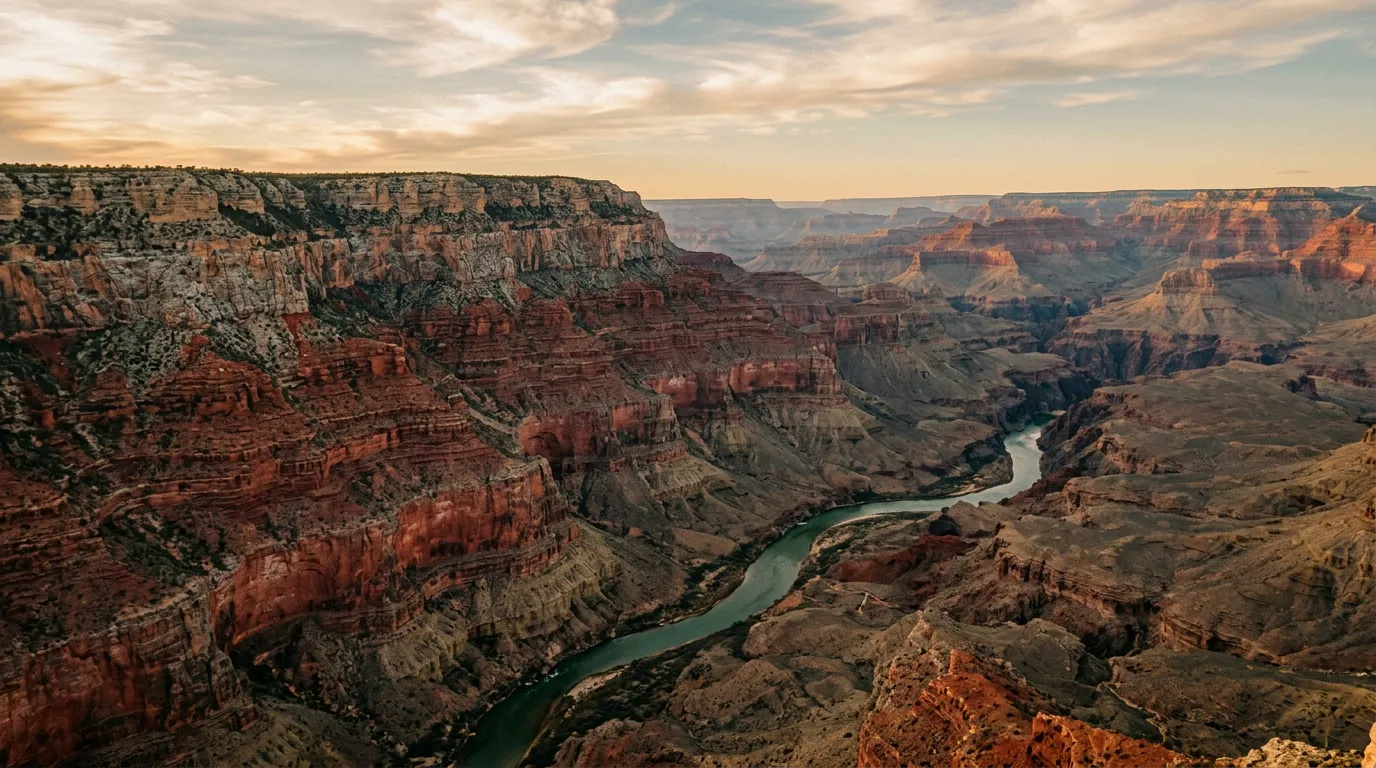
Jordan Off-Road Routes
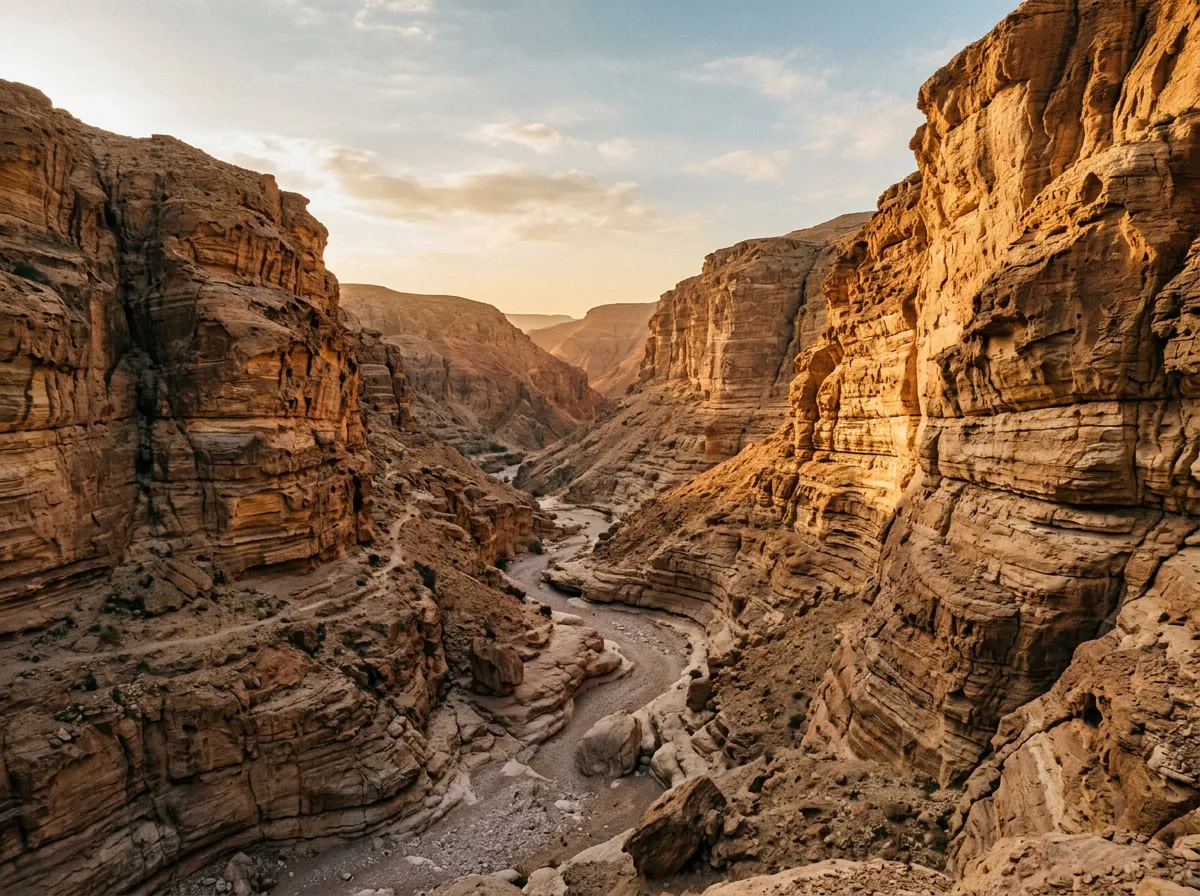
The first thing you notice about driving off-road in Jordan is the light. It does something to sandstone that no photograph will ever reproduce accurately — the rock goes from pink to copper to something close to violet in the space of an hour, and you find yourself stopping the vehicle not because the track demands it but because the landscape does. The second thing you notice is the heat. Jordan is a country where route planning and water planning are the same conversation, and where the difference between a good trip and a medical emergency is often measured in liters per person per day.
We have driven three routes across Jordan’s off-road terrain: the desert tracks of Wadi Rum, the canyon descent from Dana to Feynan, and a collection of dirt detours off the King’s Highway. Between them, they cover the full range of what Jordan offers the off-road driver — sand, rock, canyon switchbacks, wadi beds, and gravel plains — across an elevation span that drops from alpine-height ridges to the lowest point on Earth.
Terrain classification
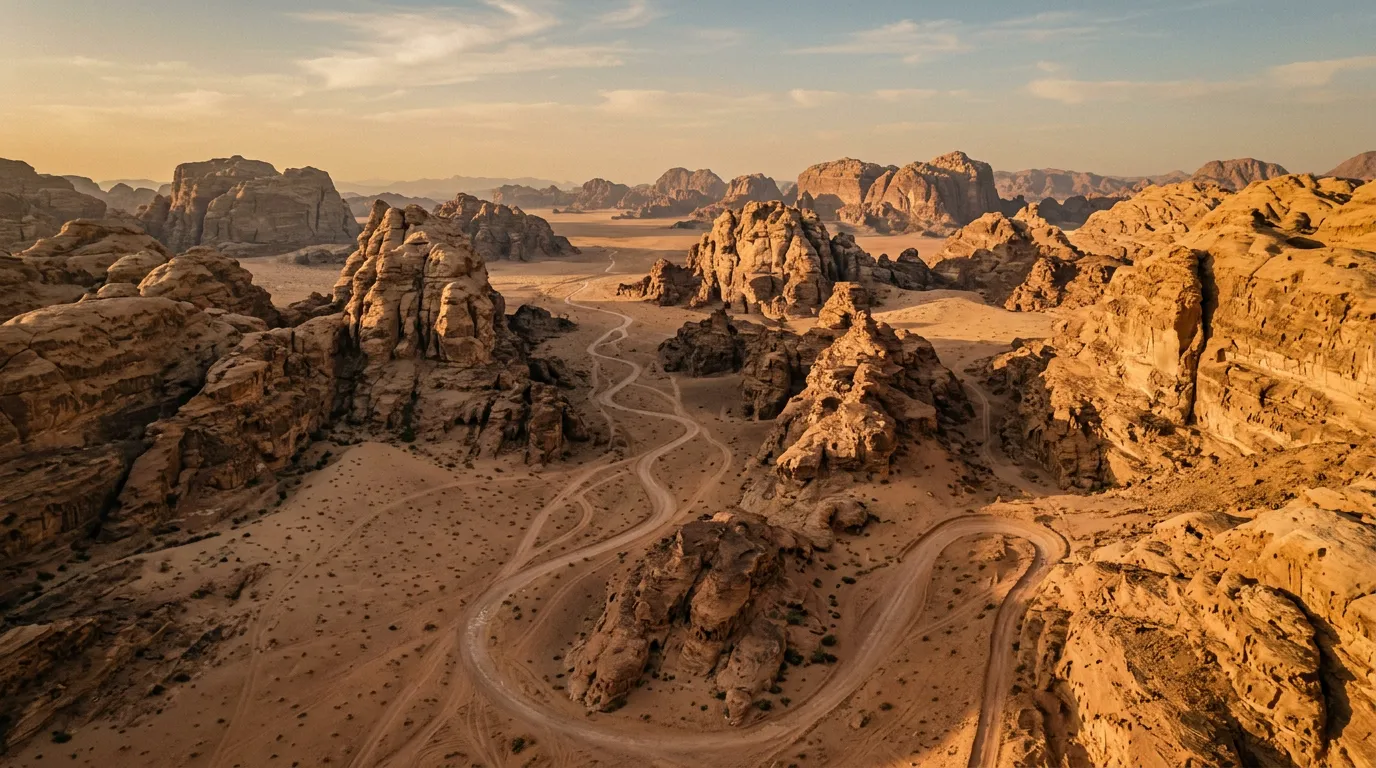
Jordan is geologically generous. The country sits at the junction of the Arabian Plate and the African Plate, which means you drive across terrain types that would normally require separate continents to experience.
| Terrain type | Where you find it | Vehicle requirement |
|---|---|---|
| Desert sand | Wadi Rum, southern desert | 4x4 with low-range, deflated tires |
| Canyon / wadi | Dana, Wadi Mujib, Wadi Hasa | 4x4 with low-range |
| Gravel plain | Eastern desert, King’s Highway detours | High-clearance 2WD |
| Mountain road | Dana highlands, Ajloun | High-clearance 2WD minimum |
| Rocky wadi bed | Multiple locations | 4x4 recommended |
The Rift Valley runs the entire western border of the country, creating a vertical drop of nearly 1,800 metres from the highland plateau to the Dead Sea shore. This is not abstract geology — it is the reason the Dana to Feynan trail exists, and it is the reason that trail will test your brakes, your nerve, and your understanding of what “steep” actually means.
Our documented routes
Wadi Rum Desert Tracks
| **Catalog: TB-JO-001 | Difficulty: Challenging | Distance: 185 km | Duration: 2-3 days** |
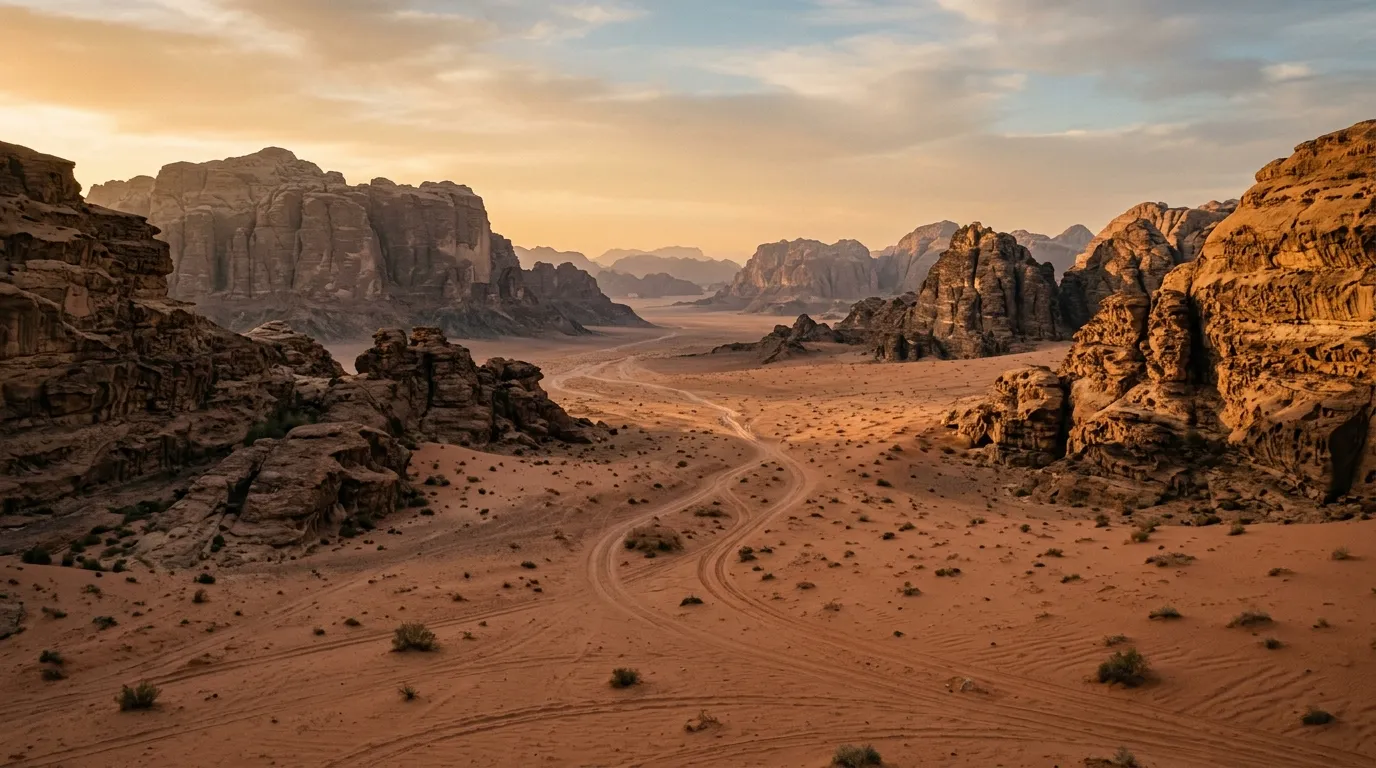
The headline route. 185 km of desert tracks through sandstone valleys, soft sand corridors, and gravel plains under formations that look like they were designed by a sculptor with a taste for the dramatic. Wadi Rum is Jordan’s most famous off-road destination for good reason — the terrain is varied, the scenery is staggering, and the logistics are manageable if you plan properly. You will need a 4x4 with low-range capability, recovery boards, and a tire compressor. You will also need to accept that some sections will bury you to the axles regardless of your skill level, and that this is normal and not a personal failing. Read the full route guide.
Dana to Feynan Canyon Trail
| **Catalog: TB-JO-002 | Difficulty: Challenging | Distance: 58 km | Duration: 1 day** |
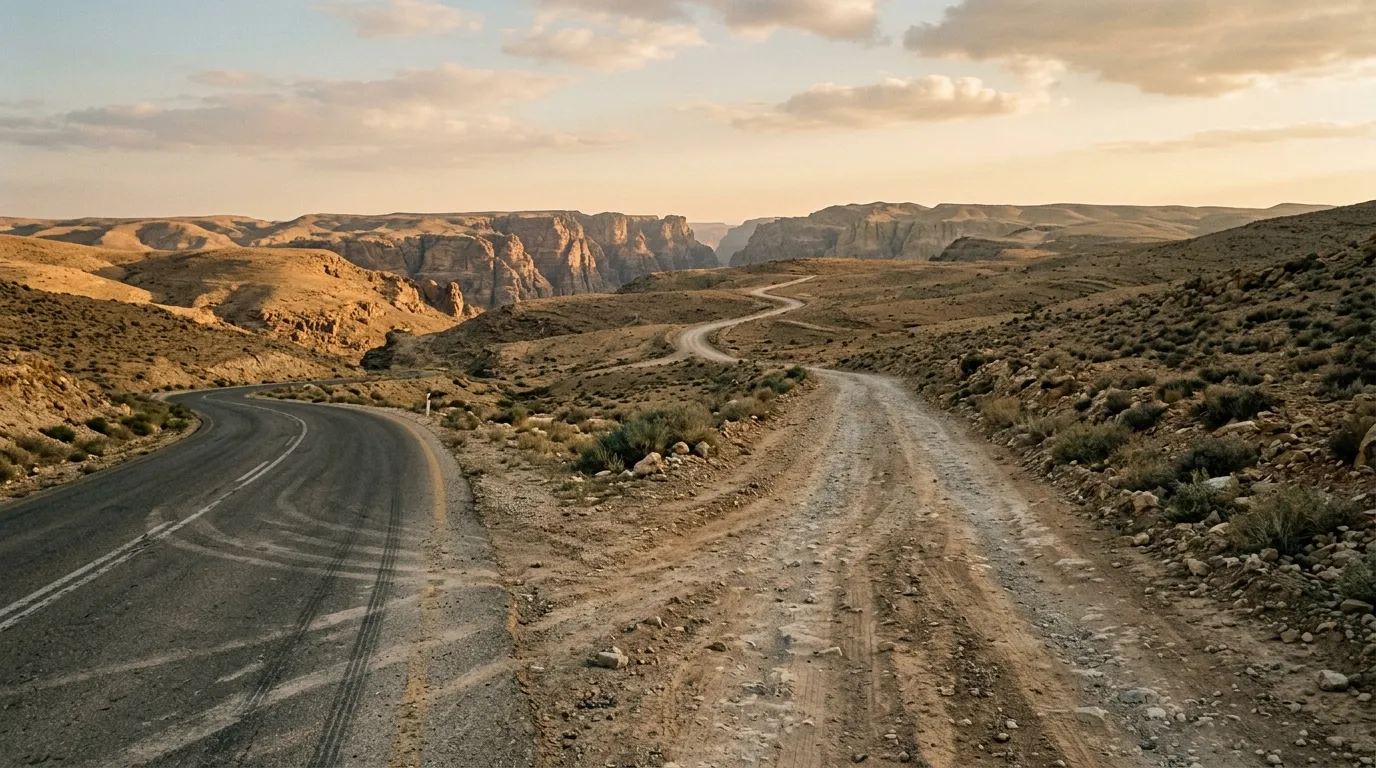
A 58 km descent from Dana village at 1,500 metres to the Feynan valley floor at minus 200 metres. The trail drops through exposed switchbacks, dry wadi beds, and some of the most visually striking geological layering in the Middle East — you can read the Earth’s history in the canyon walls as you descend, assuming you can take your eyes off the road long enough to look. No guardrails, no fuel stops, no services of any kind between the start and the Dead Sea highway. This is a route that requires commitment. Read the full route guide.
King’s Highway Off-Road Detours
| **Catalog: TB-JO-003 | Difficulty: Moderate | Distance: 260 km | Duration: 2 days** |
The King’s Highway itself is paved and busy. The interesting bits are the dirt tracks that branch off it — wadi access roads, Crusader castle approaches, seasonal tracks to hot springs, and viewpoints that the tour buses cannot reach. This is a collection of detours rather than a single through-route, which makes it the most flexible of our Jordan routes: you can pick one detour for a half-day side trip or string several together for a multi-day exploration. Most are accessible with a high-clearance 2WD, though the wadi sections want a 4x4. Read the full route guide.
Practical information
Vehicle selection
The minimum viable vehicle for Jordan off-road is a high-clearance 2WD — something like a Suzuki Vitara or a Dacia Duster. This will get you through the King’s Highway detours and some of the easier wadi tracks. For Wadi Rum and Dana, you need a proper 4x4 with low-range transfer case: Toyota Land Cruiser, Mitsubishi Pajero, or similar. Rental agencies in Amman and Aqaba offer these, but availability is seasonal — book ahead in October and November.
Fuel planning
Jordan’s highway fuel network is reliable. The problem starts when you leave the highway. Our longest fuel gap is approximately 200 km (the approach to Wadi Rum and return), though the more common challenge is the 80-120 km gaps between small-town stations along the King’s Highway detours. Carry a minimum 10L jerry can for any route beyond the highway.
| Route | Last reliable fuel | Next fuel | Gap |
|---|---|---|---|
| Wadi Rum | Wadi Rum village | Aqaba | ~120 km |
| Dana to Feynan | Dana village (limited) | Dead Sea highway | ~90 km |
| King’s Highway | Madaba or Kerak | Variable | ~80 km |
Season and weather
The driving season runs from October to April. Summer temperatures in Wadi Rum and the Dead Sea region exceed 45 degrees Celsius, and we do not recommend attempting desert routes in those conditions. Winter (December to February) brings occasional rain, which creates flash flood risk in the wadis — check forecasts before entering any canyon route. The sweet spot is October to November and March to April: warm days, cool nights, minimal rain risk.
Permits and access
Wadi Rum Protected Area charges a park entry fee of 5 JOD (approximately 7 USD) per person. Self-drive access to the desert tracks requires registering at the visitor centre. Dana Nature Reserve charges a reserve entry fee and some trails require advance booking through the Royal Society for the Conservation of Nature (RSCN). The King’s Highway detours require no permits.
Field notes
Jordan is a small country with excellent highways, which means you can base yourself in Amman, Aqaba, or the Dead Sea and reach any of our routes within a few hours of paved driving. This also means you can combine routes — the King’s Highway detours flow naturally into the Dana trail, and Wadi Rum is a logical extension from either.
The Jordanian approach to hospitality extends to the desert. Bedouin camp operators in Wadi Rum, villagers in Dana, and the staff at Feynan Ecolodge are uniformly welcoming and often helpful with route information. We received more useful track intelligence from a Bedouin camp host over tea than from any printed guide.
Mobile coverage is surprisingly good on the highways and patchy to nonexistent off-road. Download offline maps before you leave Amman. We use Maps.me and OsmAnd — both have reasonable track data for Jordan, though neither is perfect. GPS coordinates for key waypoints are included in each route guide.
Water: carry 5 litres per person per day minimum for any off-road route. The desert is not negotiable on this point.
Related regions
If Jordan’s combination of desert and canyon driving appeals to you, consider Morocco for similar terrain at a larger scale — the Sahara pistes and Atlas passes offer weeks of exploration. Oman shares the desert-and-wadi formula but adds serious dune driving and mountain roads. Both countries have well-established rental markets with off-road capable vehicles.
Ground clearance, tire type, and 4x4 lock differ between agencies. Compare before you book.