Car Rental Insurance for Dirt Roads
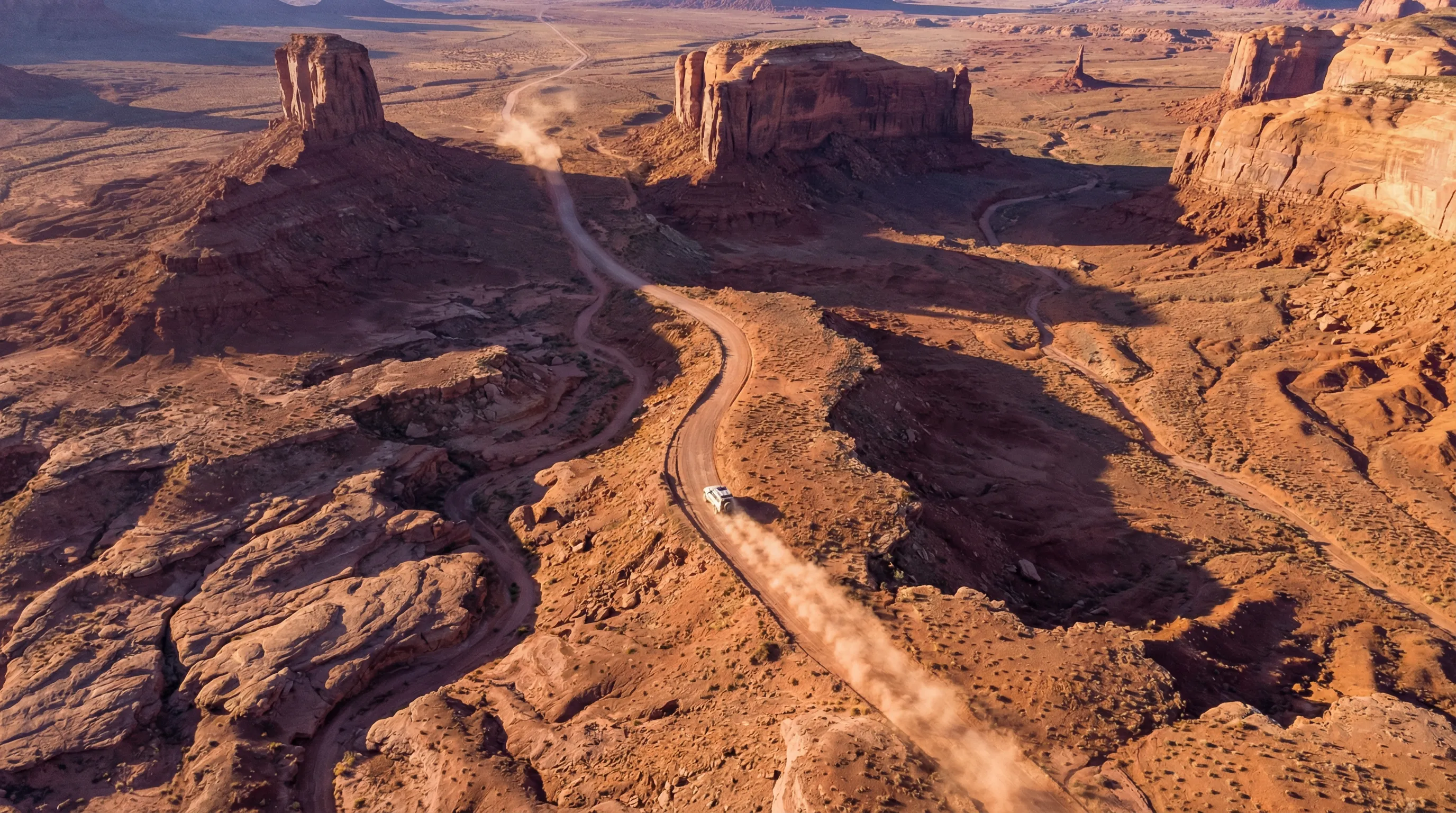
In Namibia, on the gravel road between Sesriem and Sossusvlei, we watched a French couple arguing with a tow truck driver. Their rented Hyundai Tucson had a cracked oil pan from a rock strike. The tow would cost 4,500 NAD (about $240). The oil pan repair would be another 8,000-12,000 NAD. Their rental insurance — the “full coverage” they had ticked on the booking site — excluded unpaved road damage. The total bill was heading toward $900 before the rental company added their own damage assessment fee. The couple had been on the gravel road for forty minutes.
This is the most common financial disaster in adventure driving: the collision between what travellers think their insurance covers and what it actually covers. The gap is especially wide for anyone driving on unpaved roads, because most standard rental insurance policies were designed for people who never leave the pavement.
We have dealt with rental insurance in all 13 countries we cover. We have filed claims, been denied claims, argued with claims adjusters, and learned to read the fine print the way a lawyer reads a contract — suspiciously and slowly. This guide explains what you need to know before driving off the lot onto a dirt road.
Standard rental insurance: what is actually included
When you book a rental car through any major platform or directly from a rental company, the base price typically includes two types of coverage:
CDW (Collision Damage Waiver)
CDW limits your financial liability if the rental car is damaged in a collision or single-vehicle incident. Without CDW, you would be liable for the full repair cost — potentially the full value of the vehicle. With CDW, your liability is capped at the excess (deductible), which is the amount you pay out of pocket before the waiver kicks in.
Typical excess amounts for vehicles used off-road:
| Vehicle Type | Typical Excess (USD) |
|---|---|
| Economy car | $500-1,000 |
| Crossover/SUV | $1,000-1,500 |
| 4x4 (Jimny, Duster) | $1,200-2,000 |
| 4x4 (Land Cruiser, Hilux) | $1,500-3,000 |
The excess is held as a deposit on your credit card at pickup. If you return the car undamaged, the hold is released (usually within 5-14 business days, sometimes up to 30).
Third-Party Liability (TPL)
Covers damage you cause to other people and their property. Legally mandatory in every country we cover. Always included in the base rental price. Not usually an issue — the coverage amounts are set by law and are adequate for most situations.
What CDW does NOT cover
This is where it gets expensive. Standard CDW typically excludes:
- Tires. Punctures, blowouts, sidewall damage — the most common type of damage on dirt roads.
- Windshield and glass. Chips and cracks from flying stones — the second most common type of damage on dirt roads.
- Underbody. Rock strikes to the oil pan, exhaust, differential housing, transfer case — the third most common type of damage on dirt roads.
- Roof. Damage from overhanging branches, low garage roofs, etc.
- Interior. Water damage from river crossings, mud, dust.
- Damage caused on unpaved roads. This is the big one.
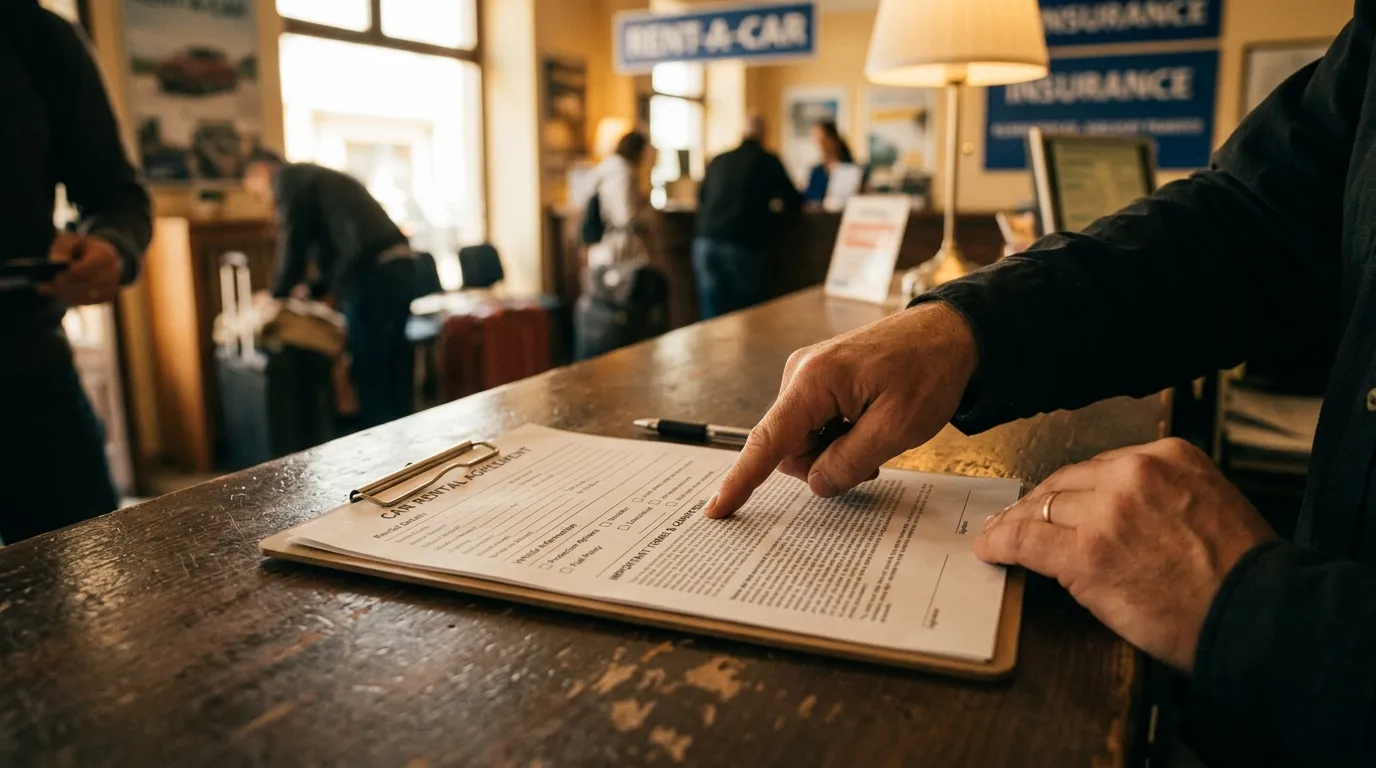
Read that last point again. Many CDW policies contain a clause that voids coverage entirely if the damage occurred on an unpaved road, off-road, or on “surfaces not designed for motor vehicles.” The exact wording varies by company and country, but the effect is the same: drive on dirt, and your CDW may not apply.
The unpaved road clause
This clause appears in different forms across rental contracts worldwide. Here are real examples we have encountered:
“Coverage does not apply to damage sustained while the vehicle is being driven on unpaved roads, tracks, or surfaces not designed for motor vehicle traffic.”
— International chain, Iceland
“The renter is fully liable for any damage occurring off sealed roads.”
— Local agency, Namibia
“CDW is void if the vehicle is used on roads not shown on official road maps.”
— Booking platform terms, Morocco
“Damage to tires, underbody, and drivetrain on gravel roads is the renter’s responsibility regardless of insurance purchased.”
— Local agency, Georgia
The clause is not always obvious. It may be buried in the general terms and conditions rather than highlighted in the insurance section. We have found it in paragraph 14 of a 20-paragraph contract, in a supplementary document that was only available in the local language, and in one case, on a laminated sign behind the rental desk that the agent gestured toward but did not ask us to read.
The practical effect: if you drive on any of the routes we document on this site and damage the vehicle, your standard CDW may not cover it.
How to actually get covered
Option 1: Specialist rental companies
In countries where off-road driving is common — Namibia, South Africa, Iceland, Oman — specialist rental companies exist specifically for overland and adventure travel. Their contracts explicitly permit unpaved roads. Their insurance covers tires, windshield, and underbody. Their vehicles are maintained and equipped for off-road use.
Examples by country:
| Country | Specialist Companies | Off-Road Insurance Included | Typical Premium Over Standard |
|---|---|---|---|
| Namibia | Asco Car Hire, Caprivi Car Hire, Namibia2Go | Yes, with excess | 20-40% more than standard |
| South Africa | Bushlore, Drive South Africa | Yes, for designated 4x4 vehicles | 15-30% |
| Iceland | Lotus Car Rental, Go Car Rental, Lava Car | F-road coverage as add-on or included | 10-25% |
| Oman | Oman Car Hire (local agencies via aggregators) | Usually included for 4x4 | Minimal premium |
The premium for a specialist company is typically $15-40/day more than a standard rental. For a two-week trip on dirt roads, that is $210-560 extra — which is almost certainly less than a single uncovered damage claim.
Option 2: SCDW (Super Collision Damage Waiver)
SCDW reduces or eliminates the excess on your CDW. At a standard rental company, SCDW typically costs $8-25/day and drops the excess from $1,000-3,000 down to $0-200.
The catch: SCDW usually has the same unpaved road exclusion as CDW. Reducing the excess to zero does not help if the entire coverage is void because you were on a dirt road. However, some rental companies (particularly in Morocco, Jordan, and the Balkans) offer SCDW that does apply on unpaved roads — you need to ask explicitly and get confirmation in writing.
Ask this specific question at the rental counter: “If I damage the vehicle on an unpaved gravel road, does the SCDW still apply?” If the answer is no, SCDW is not worth buying for off-road use.
Option 3: Third-party excess insurance
Third-party insurance policies purchased before your trip can cover the gap that rental insurance leaves. These work on a reimbursement basis: you pay the rental company’s excess if damage occurs, then file a claim with the third-party insurer to get it back.
| Provider | Annual Cost | Per-Trip Cost (14 days) | Covers Unpaved Roads | Covers Tires/Glass/Underbody | Claim Process |
|---|---|---|---|---|---|
| RentalCover | — | $8-15/day | Yes (check policy) | Yes | Online, 2-4 weeks |
| Insurance4CarHire | $50-70/year | — | Yes (most policies) | Yes | Email + forms, 3-6 weeks |
| iCarhireinsurance | $45-60/year | — | Yes (check country) | Yes | Email + forms, 3-6 weeks |
| Worldwideinsure | $55-75/year | — | Country-dependent | Yes | Online, 4-8 weeks |
Key considerations:
- Country coverage. Not all third-party insurers cover all countries. Ethiopia, Tanzania, and Georgia are sometimes excluded or listed as “check before travel.” Verify your specific destination before purchasing.
- Definition of “off-road.” Some third-party policies define off-road as “not on a road shown on a standard road map.” This might exclude some of the tracks we document. Others define it as “not on a public road” — which is different and potentially more restrictive. Read the definitions section of the policy.
- Excess cap. Third-party policies have their own maximum — typically $5,000-10,000. If the rental company charges you $3,000 for an oil pan and differential repair, the third-party policy covers it. If the vehicle is a write-off and the rental company charges $25,000, you may hit the third-party cap.
- Documentation requirements. To file a successful third-party claim, you need: the rental agreement, the damage report from the rental company, photographs of the damage, a receipt for the amount charged, and in some cases a police report. Photograph everything. Keep every receipt.
Option 4: Credit card rental insurance
Many premium credit cards (Visa Platinum, Mastercard World, Amex Platinum) include rental car CDW as a cardholder benefit. This can be excellent coverage — often with zero excess — but it comes with restrictions that are particularly relevant for off-road drivers.
Common restrictions on credit card rental insurance:
- Maximum rental duration (usually 15-31 days). Longer trips are not covered.
- Vehicle type restrictions. Some cards exclude 4x4s, SUVs above a certain value, or “specialty vehicles.”
- Country exclusions. Cards issued in the US and EU often exclude non-EU countries. Georgia, Jordan, Ethiopia, Tanzania, and Morocco are frequently excluded. Iceland is sometimes excluded.
- Off-road exclusion. Many credit card insurance policies contain the same unpaved road clause as rental CDW. Check the card’s insurance terms specifically.
- Claim process requires you to decline the rental company’s CDW. This means the rental company will hold the full vehicle value as a deposit (not just the excess) — potentially $10,000-25,000. Your credit card needs sufficient available credit.
Our recommendation: Call the number on the back of your card and ask: “Does my rental car insurance cover damage sustained on unpaved gravel roads in [country]?” Get the answer before you travel, not after the damage.
Country-specific insurance situations
Iceland: F-roads
Iceland’s F-roads (highland interior roads) are a special case. They are unpaved, many involve river crossings, and they are officially designated as roads by the Icelandic government. Standard rental insurance from most Icelandic companies excludes F-roads unless you purchase specific F-road coverage (typically $15-30/day). River crossing damage is almost always excluded regardless, because it is considered “negligent use” — the argument being that you chose to enter water.
Sand and ash damage is a separate exclusion unique to Iceland. Volcanic ash storms can strip paint from a vehicle in minutes. Most insurers cover ash damage only if the vehicle was stationary and the driver could not have avoided it. If you drove into an ash storm, you are liable.
Recommendation for Iceland: Rent from a specialist F-road company. Buy their F-road coverage. Accept that river crossing damage is on you. Check weather forecasts for ash/sand warnings daily.
Namibia: gravel highways
Namibia is unusual because most of its road network is unpaved gravel. The main tourist routes — to Sossusvlei, Etosha, Damaraland — are all gravel. This means the unpaved road exclusion, if applied literally, would void coverage for almost every rental in the country. Specialist Namibian rental companies understand this and their insurance covers gravel road driving. International chains operating at Windhoek airport may not — check before signing.
Single-vehicle rollovers are the most common serious incident in Namibia, usually caused by excessive speed on gravel. Most insurance covers rollovers if the driver was not negligent, but “excessive speed on gravel” can be argued as negligent.
Recommendation for Namibia: Use a specialist overlanding rental company. Their insurance is designed for Namibia’s road network. Pay for the highest tier of coverage — the premium is modest compared to the cost of a Hilux differential.
South Africa: designated 4x4 trails
South Africa has a system of officially designated 4x4 trails (Baviaanskloof, Sani Pass, Richtersveld, etc.). Standard rental insurance almost always excludes these trails. Specialist 4x4 rental companies like Bushlore include trail coverage for their designated off-road vehicles.
Sani Pass has an additional complication: the road crosses into Lesotho. Your rental insurance and your rental agreement need to cover driving in Lesotho. Not all companies allow cross-border travel. Verify before you start the ascent.
Georgia: local agency flexibility
Georgia’s rental market is dominated by local agencies rather than international chains. Most local agencies are pragmatic about unpaved roads — they know the Tusheti Road and the David Gareja track are major tourist attractions, and they know renters will drive them. However, “pragmatic” is not the same as “insured.” Many Georgian agencies will verbally say “yes, you can drive on gravel roads” but their written contract excludes it.
Recommendation for Georgia: Get the off-road permission in writing — an email, a WhatsApp message, or a clause added to the contract. If damage occurs and you have only a verbal agreement, the agency will default to the written contract.
Morocco: Sahara piste coverage
Driving the Sahara pistes (Merzouga to Zagora, Erg Chebbi circuits) requires specific coverage. Most standard rental contracts in Morocco exclude desert driving. Local agencies in Ouarzazate, Errachidia, and Merzouga offer 4x4s with desert-appropriate insurance, but the coverage details vary widely.
Recommendation for Morocco: Rent from a local agency in the desert gateway towns (not from an international chain at Casablanca airport). Confirm in writing that the insurance covers piste driving. Accept that sand damage to the exterior (sand blasting in windstorms) may still be excluded.
Jordan and Oman: desert driving norms
Both countries have well-established adventure driving cultures and rental companies that understand desert use. In Oman, most 4x4 rentals include wadi and desert coverage by default. In Jordan, Wadi Rum agencies rent vehicles specifically for the desert. Standard airport rentals may not include desert coverage — ask.
What to photograph before driving off the lot
This section is not about insurance terms — it is about protecting yourself against fraudulent damage claims. It takes five minutes and can save you thousands.
-
Walk-around video. One continuous video circling the entire vehicle. Include the roof (climb on something or use your phone above your head), all four wheels, the underbody edges, and both bumpers. Narrate the date and time.
-
Close-up photos of every existing mark. Every scratch, dent, chip, scuff, and scrape. Include ruler or card for scale on larger damage.
-
Tire photos. All four tires plus the spare. Show the tread depth and sidewall condition.
-
Windshield. Photograph the entire windshield from outside. Any existing chips or cracks should be visible.
-
Odometer and fuel gauge. Photograph the dashboard showing mileage and fuel level.
-
The rental agreement. Photograph every page, front and back.
Store these photos and videos in at least two places — your phone and a cloud backup (email them to yourself if nothing else). If the rental company tries to charge you for pre-existing damage, these records are your defence.
When damage happens on a dirt road
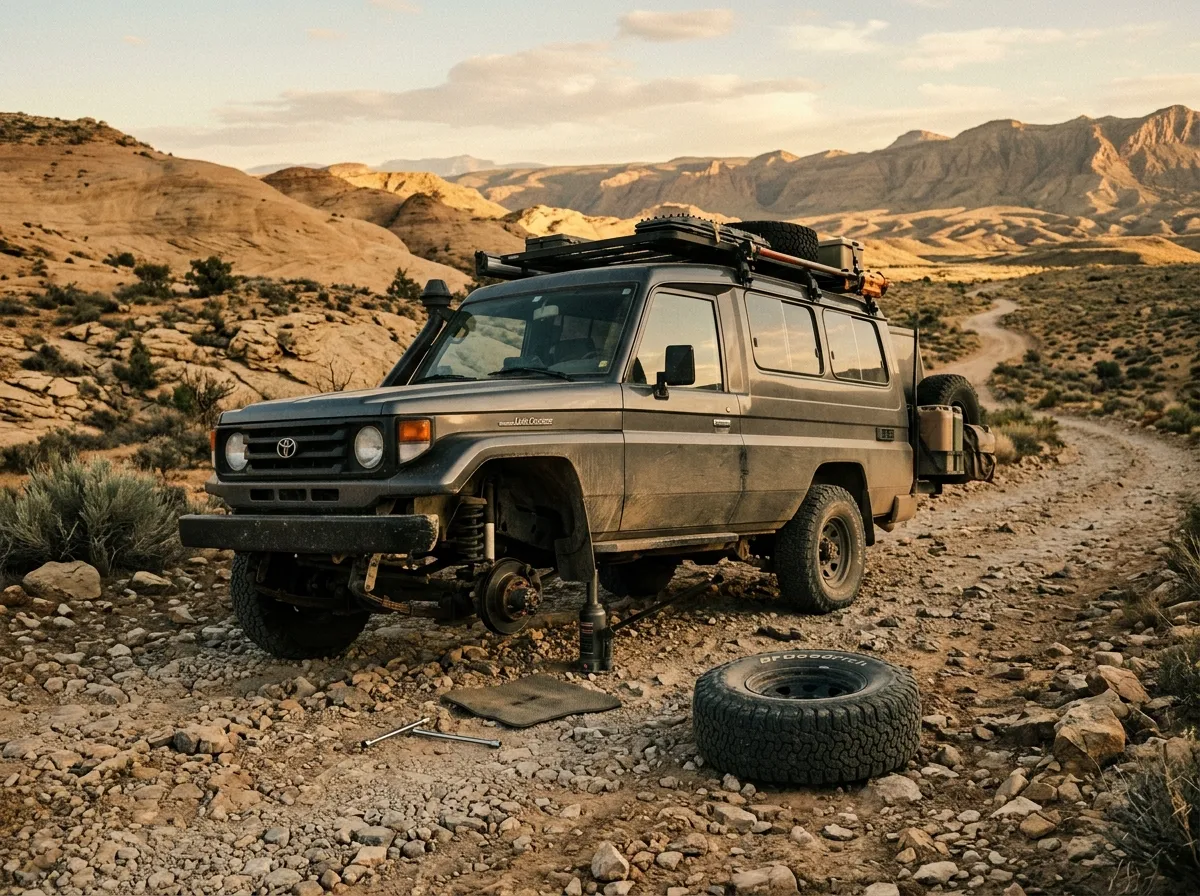
Despite all precautions, damage can happen. A rock strike, a tire blowout, a scrape on a narrow track. Here is the process:
Step 1: Document the damage immediately
Photograph the damage from multiple angles. Photograph the location (drop a GPS pin). Note the time, the road surface, and the circumstances. If another vehicle was involved, photograph it and exchange details.
Step 2: Report to the rental company
Call the rental company’s emergency number. Describe the damage honestly. Ask for instructions — some companies want you to continue to the nearest town; others want you to wait for a tow. Follow their instructions and document that you did so.
Step 3: Police report (if applicable)
In some countries and for some types of damage, a police report is required for any insurance claim. Even if it is not required, getting one creates an official record that supports your version of events. In Jordan, Oman, and Morocco, police reports are standard for any vehicle damage.
Step 4: At return
The rental agent will inspect the vehicle. Point out the damage yourself — do not try to hide it. Show them your pre-rental photos proving the damage was not pre-existing. Get a written damage assessment with the estimated cost. Do not sign anything you do not understand.
Step 5: Dispute if necessary
If you believe the damage charge is inflated (and inflated charges are common), dispute it with your credit card company. Provide your pre-rental photos, the damage assessment, and any communication with the rental company. Credit card chargebacks are your strongest tool in a dispute.
If you have third-party insurance, file your claim promptly. Most policies require claims within 30-60 days. Include all documentation: rental agreement, damage report, charge receipt, photographs, police report.
Real damage stories
We share these not to alarm you but to illustrate the kinds of costs involved and how they resolved.
Georgia, Tusheti Road. Rock strike cracked the plastic underbody panel on a rented Pajero. Rental company quoted 45,000 GEL ($16,000) — which was absurd for a plastic panel. We disputed with photographs showing the panel was cosmetic, not structural. Settled at 2,500 GEL ($900). Third-party insurance reimbursed the full amount.
Namibia, Damaraland. Tire blowout on a rocky section. No tread left on the existing tires (they should not have been on the vehicle). Replaced the tire at a farm for 1,200 NAD ($65). The rental company tried to charge for a new set of four tires at return. We had our pre-rental tire photos showing the original tread condition. Charge was dropped.
Iceland, F26 Sprengisandur. River crossing went wrong — the water was 15 cm deeper than expected (it had rained overnight in the highlands). Water entered the footwell but did not reach the engine. The rental company charged 180,000 ISK ($1,300) for interior cleaning and electrical checks. F-road insurance covered the cleaning. The electrical check was excluded as “river damage.” We ate that cost.
Morocco, Atlas Mountains. Windshield crack from a stone thrown up by a passing truck on the Tizi n’Test road. Standard CDW excluded glass. SCDW was not available for that vehicle. Replacement cost: 3,500 MAD ($350). Third-party insurance covered it after a six-week claim process.
The insurance decision framework
Here is how we decide what to buy for each trip:
| Situation | Our Approach |
|---|---|
| Short trip (1-3 days), easy gravel | Standard CDW + document everything |
| Week-long trip, moderate routes | SCDW if it covers unpaved roads; third-party insurance as backup |
| Multi-week trip, challenging routes | Specialist rental company with off-road coverage + third-party insurance |
| Desert routes (sand driving) | Specialist rental company only. No standard insurance covers sand damage adequately |
| Any trip in any country | Pre-rental photo documentation. Every time. No exceptions. |
The cost of proper coverage for off-road driving is typically $10-30/day. Over a two-week trip, that is $140-420. A single uncovered rock strike, tire blowout, or windshield crack easily exceeds that amount. A cracked oil pan or damaged differential can cost $1,000-3,000.
This is not a category of travel expense to economise on. Get the coverage, read the fine print, photograph the vehicle, and go drive.
| Choosing the right rental vehicle | Driving essentials and recovery gear | Fuel range planning |