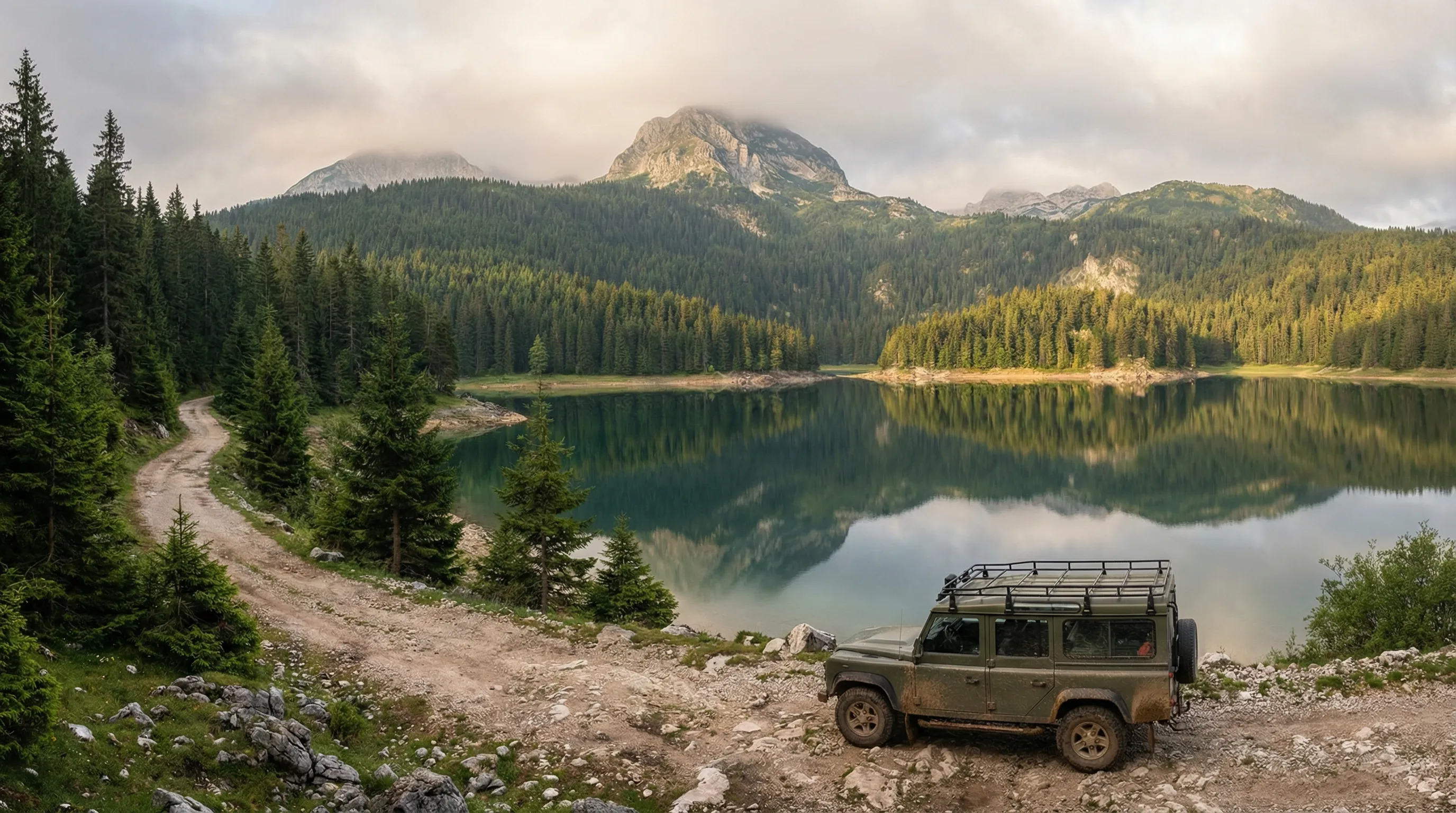
Prokletije Border Trail
The Prokletije — the Accursed Mountains — straddle the border between Montenegro and Albania like a wall. On the Albanian side, they contain the Valbona-to-Theth crossing. On the Montenegrin side, they contain this: an 85 km route along the border on tracks that range from reasonable gravel to exposed rock that we attempted three times before finding the line.
“Accursed” is the standard translation of the Albanian “Bjeshket e Nemuna,” though the actual etymology is debated. Having driven both sides, we think the name was contributed by someone who tried to get a vehicle through these mountains before the invention of low-range transfer cases. The limestone is sharp, the gradients are hostile, and the terrain has a persistent quality of looking beautiful from a distance and threatening from tyre-height.
We drove this route from Gusinje — a small town in Montenegro’s southeastern corner that functions as the gateway to the Prokletije range. The route loops through the Ropojana and Grebaje valleys, over a high pass at approximately 2,000 metres, and returns to Gusinje via a different valley. It is a full day of driving, not because of distance — 85 km is modest — but because the average speed on the technical sections is below 15 km/h and the pass section dropped our pace to walking speed.
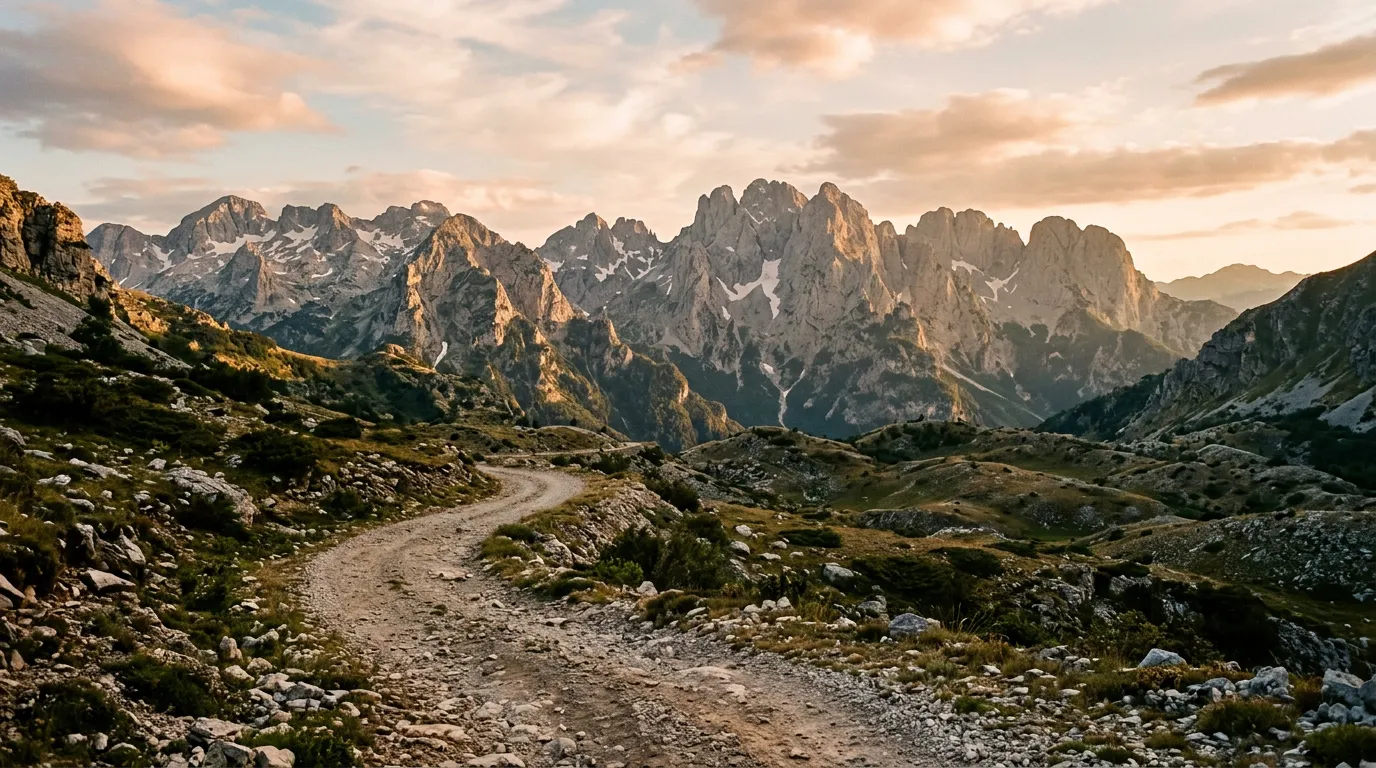
Route overview
The route can be driven as a loop from Gusinje or as a point-to-point from Gusinje to Plav (a slightly larger town 8 km northeast). We drove the loop, returning to Gusinje, which simplifies fuel planning and accommodation.
| Section | Distance | Terrain | Difficulty | Notes |
|---|---|---|---|---|
| Gusinje to Grlja Waterfall | 12 km | Gravel road, narrow | Easy-Moderate | Canyon approach, one-lane bridges |
| Grlja to Ropojana Valley | 15 km | Gravel deteriorating to rocky track | Moderate | Valley floor, scattered fords |
| Ropojana to summit pass | 18 km | Rocky track, loose surface | Challenging | Sustained climb, exposure |
| Summit to Grebaje Valley | 15 km | Rocky descent, scree | Challenging | Steep switchbacks |
| Grebaje to Gusinje return | 25 km | Gravel road, improving | Moderate | Forest track to gravel road |
GPS start: Gusinje town centre (42.5333 degrees N, 19.8667 degrees E). GPS end/return: same point.
Gusinje to the Ropojana Valley
Gusinje is a town of about 1,500 people that exists in a permanent state of being about to become a tourist destination. The mosque, the Ottoman bridge, the mountain views — they add up to a town that should be famous and is not. There are two fuel stations, a few restaurants, and a handful of guesthouses. Fill your tank here. The next fuel is in Plav, 8 km away, and there is nothing on the route itself.
From Gusinje, the track heads south along the Grlja River through a narrow canyon. The surface is compacted gravel, one lane, with passing places that require awareness and a willingness to reverse. The canyon walls rise on both sides — grey limestone streaked with iron staining — and the river is audible below. At km 8, a short side track leads to Grlja Waterfall, a 15-metre cascade that drops into a plunge pool of cold, clear water. It is a 200-metre walk from the parking area and worth the stop.
Beyond the waterfall junction, the valley opens into the Ropojana — a classic glacial U-shaped valley running parallel to the Albanian border. The floor is flat meadow crossed by braided streams. The mountains on the Albanian side rise to 2,500 metres in a wall of bare limestone. The track follows the east side of the valley, crossing several small streams on rock and gravel fords. In summer, these are ankle-deep and present no problem. In spring snowmelt, they can be significantly deeper.
The valley is grazed by sheep and cattle tended by shepherds who spend the summer in stone shelters on the meadow. The dogs are Sarplaninac and Tornjak — large livestock guardian breeds that take their work as seriously as any professional. They will approach vehicles, bark, and sometimes stand in the track. The protocol is: stop the vehicle, wait for the shepherd to notice, let the shepherd call the dogs, proceed slowly. Do not open the door. Do not honk aggressively. These are working animals doing their job.
The pass
The climb to the summit begins at the head of the Ropojana Valley, where the flat meadow ends and the terrain tilts upward. The track switches from valley-floor gravel to exposed mountain rock in a single kilometre, and the character of the driving changes with it.
The ascent covers approximately 800 metres of elevation gain over 10 km of track. The surface is loose rock — limestone fragments from fist-size to football-size — over harder rock underneath. The gradient varies but includes sections above 20 percent. Low-range is not optional. Second gear in low range is the default, dropping to first on the steeper ramps.
We attempted the final section to the pass summit three times. The first attempt failed on a ramp of loose scree where the Jimny lost traction on all four wheels simultaneously — the surface simply slid downhill under the tires, taking the vehicle with it. We reversed carefully back to stable ground, walked the section, identified a line with more exposed bedrock, and tried again. The second attempt gained 50 metres before the same problem. The third attempt followed a different line entirely — further right, on rockier ground with visible bedrock footholds — and made the summit.
The pass itself is a windswept saddle at approximately 2,000 metres. The Albanian border is perhaps 500 metres to the south, unmarked on the ground but clear on the map. Do not cross it — this is not a border crossing point, and there is no infrastructure on either side. The views are comprehensive: Montenegro’s Prokletije peaks to the north and east, the Albanian Accursed Mountains to the south, and somewhere far below, the valleys where the next day’s driving will take place.
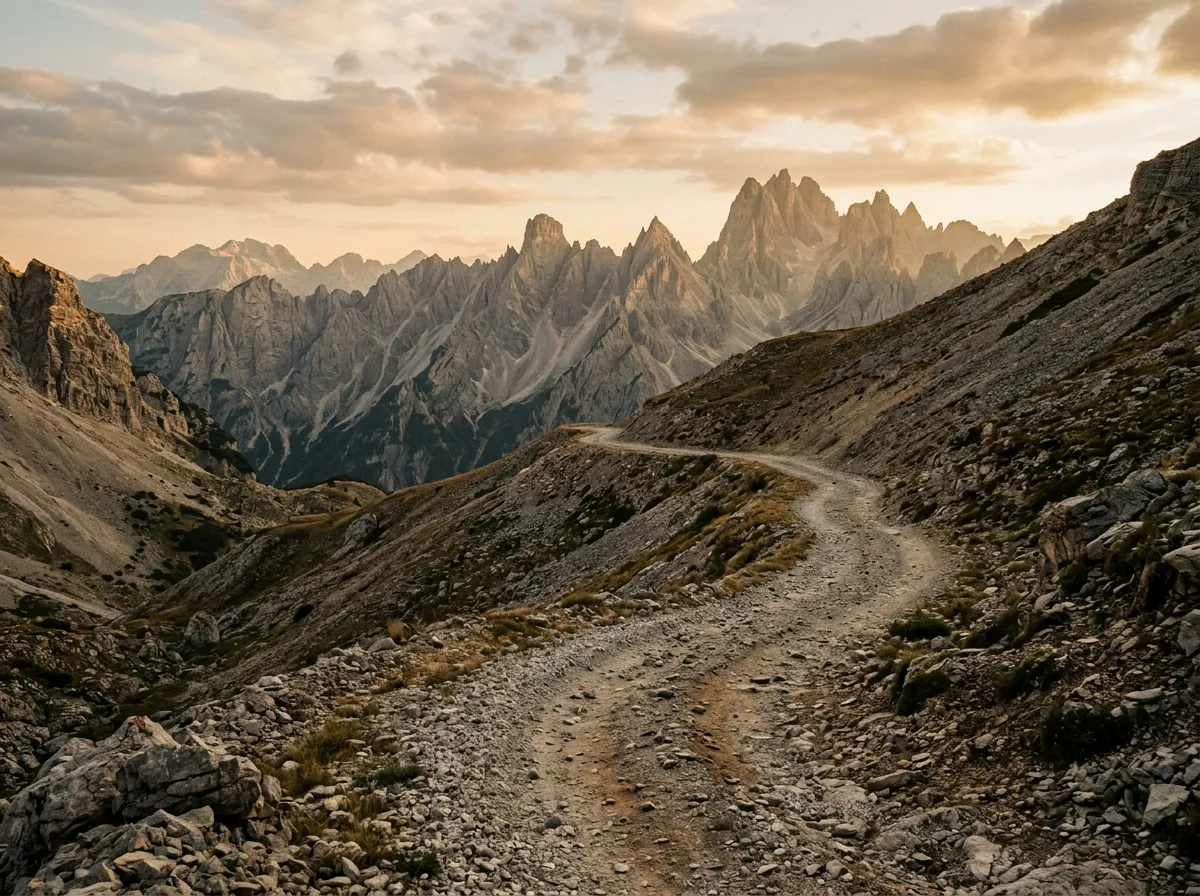
Descent to Grebaje
The descent from the pass to the Grebaje Valley is steep, rocky, and rewards patience. The switchbacks are tighter than the ascent and the loose surface demands careful braking — engine braking in low-range first gear, with the foot brake used only to set speed at the top of each ramp. We stopped twice to let the brakes cool, which is not overcaution on a mountain where the nearest mechanic is 30 km of rough track away.
The Grebaje Valley is a cirque — a glacial amphitheatre surrounded on three sides by peaks reaching 2,500 metres. The floor is meadow and scattered pine. The sense of enclosure is powerful: you are at the bottom of a stone bowl, the walls are vertical, and the sky is a circle above. There is a mountain hut at the head of the valley (summer-staffed, basic beds, food available) that serves hikers climbing the surrounding peaks.
The valley is a natural stopping point. We spent an hour here, walking the meadow and reassessing what we had driven. The Jimny had new scratches on the skid plate and a slightly different exhaust note that turned out to be a loose heat shield — casualty of the scree sections. Nothing structural. The heat shield was resecured with a cable tie from the toolkit, which is exactly why cable ties belong in the toolkit.
Return to Gusinje
From Grebaje, the return route follows a different valley northeast toward Gusinje. The track is initially rocky but improves steadily — within 10 km, the surface becomes reasonable gravel through mixed forest. The gradient is gentle, the views are pastoral, and the driving pace increases from the 10-15 km/h of the pass to a comfortable 30-40 km/h.
The final 15 km into Gusinje follow a maintained gravel road that is a small joy after the technical sections — wide, smooth, and fast enough to let the engine cool. We arrived in Gusinje at 17:30, having left at 07:00. The route had taken 10.5 hours for 85 km, which averages to 8 km/h and tells you everything about the character of the driving.
Practical information
| Item | Detail |
|---|---|
| Total distance | ~85 km |
| Driving time | 8-11 hours |
| Start/end | Gusinje (42.5333 degrees N, 19.8667 degrees E) |
| Fuel | Gusinje or Plav. Fill up completely. Carry 10L jerry can. |
| Water | 3L per person. No water sources on the pass section. |
| Mobile coverage | None for approximately 50 km. Coverage returns near Gusinje. |
| Accommodation | Gusinje: guesthouses 20-40 EUR/night. Grebaje: mountain hut (summer only). |
| Emergency | No assistance available on the route. Self-recovery only. |
Who should drive this
The Prokletije Border Trail is our most technical route in the Balkans. The pass section in particular requires experience with loose-rock driving, comfort with exposure, and a vehicle with genuine low-range capability. If you have driven the Valbona to Theth crossing in Albania, the Prokletije pass is a step up in surface difficulty though slightly shorter in duration. If the Durmitor Ring Road is your current level, the Prokletije is a significant jump.
What we would not do: attempt this route after rain, attempt it in a vehicle without low-range, or attempt it without a tow strap and the knowledge of how to use it. There is nowhere to phone for help from the pass section, and the walk back to Gusinje from the summit is 6-8 hours on foot.
That said — for experienced off-road drivers with the right vehicle, this is one of the best days of driving in Europe. The Accursed Mountains earn their name, but they also earn the effort.
Return to the Montenegro hub for the full country overview.